Why Pastel Leggings Look Sheerer Than Black Ones of the Same Thickness
Quick Answer: Light fabrics transmit more light than dark ones at identical thickness, because dark dye absorbs light that pale dye lets pass through. Stretching thins the fabric and widens the gaps between yarns, which affects a pastel dramatically and a black barely at all. The fix is fabric weight and knit density, not a different pastel shade — look for 240 gsm or higher in light colors.
The black pair is completely opaque.
The lilac pair — same brand, same style, same size — goes sheer the moment you bend.
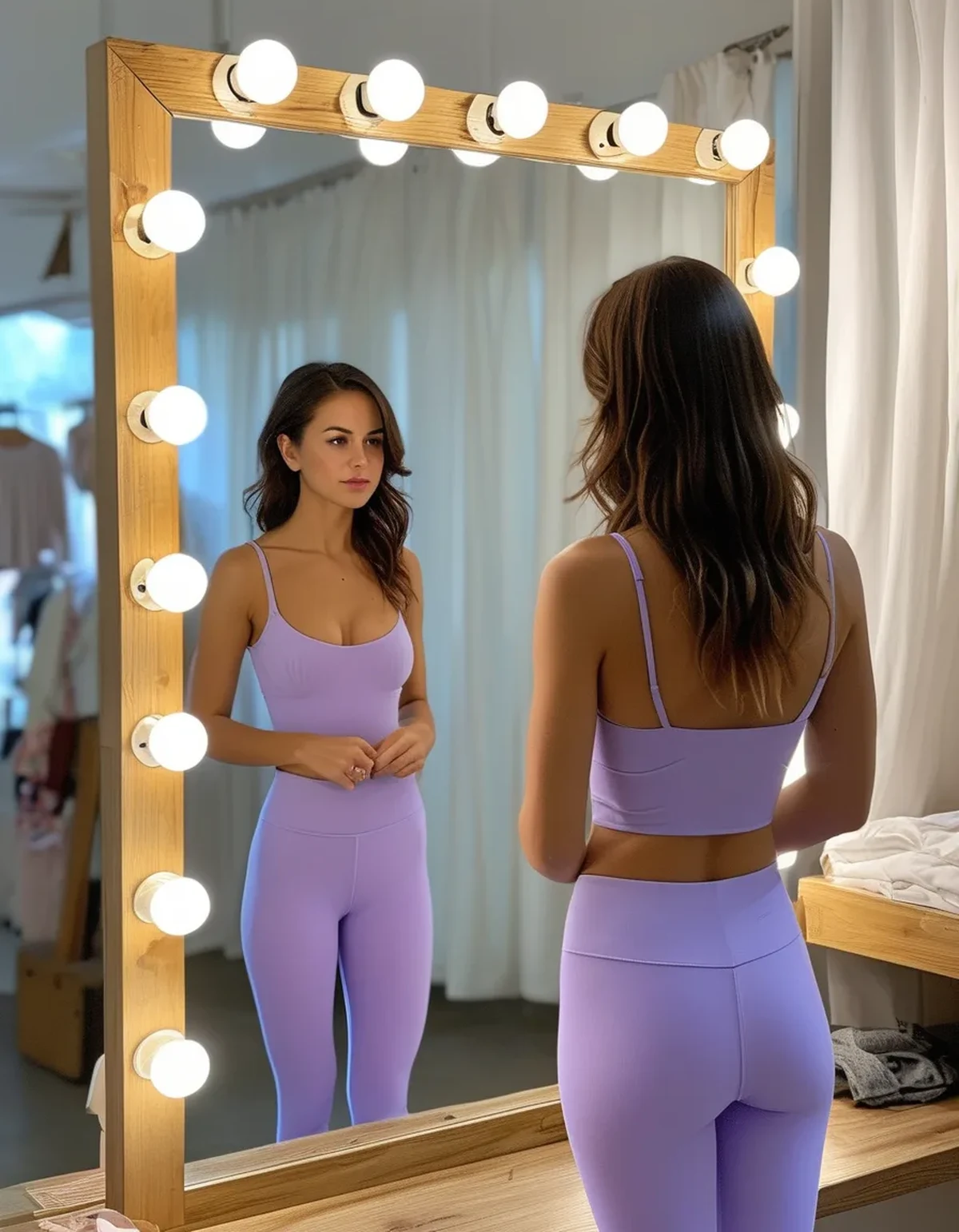
Why does color change opacity so much?
Because opacity is about how much light passes through, and dye is what stops it.
Dark dye absorbs transmitted light. Black pigment absorbs across the visible spectrum, so light entering the fabric largely does not come out the other side. That absorption is doing a huge share of the opacity work you attribute to the fabric.
Pale dye absorbs very little. A pastel lets a large fraction of light through the yarn itself, so the only thing stopping transmission is the physical density of the knit.
This means pastels need more fabric to hit the same opacity. A light color at 200 gsm and a black at 200 gsm are genuinely not equivalent garments, even from the same production run.
Stretching multiplies the difference. Under stretch, yarns separate and the fabric thins. In black, more light gets through and it is still absorbed. In lilac, more light gets through and nothing stops it.
Skin tone contrast finishes the job. Sheerness is visible only when what is behind it contrasts with the fabric. Pale fabric over skin creates less contrast at rest and much more once the fabric is stretched taut over a curve.
What actually predicts whether a pastel pair will hold up?
Four measurable things, and one of them is on the label.
Fabric weight in gsm is the most useful number. Below about 200 gsm, expect sheerness in light colors regardless of marketing claims. 240 gsm and above is where pastels start behaving like their dark counterparts. Brands that publish gsm are telling you something; brands that do not, often for a reason.
Knit density beats fiber content. A tightly knit poly-spandex outperforms a loosely knit one of identical composition. You cannot read this from a tag — you read it by holding the fabric to light.
Double-layer or gusseted construction at the seat is the single most reliable structural fix, and it is why some pastel pairs are genuinely squat-proof while most are not.
Spandex percentage cuts both ways. More spandex means more stretch, which means more thinning under load. A 20 percent spandex pastel legging stretches further and goes sheerer than a 12 percent one at the same weight.
The in-store test that actually works: stretch the fabric over your own forearm rather than holding it up to a window. Contrast against skin is what matters, and window light overstates the problem in a way that makes you reject perfectly good pairs.
What Nobody Tells You About Light Activewear
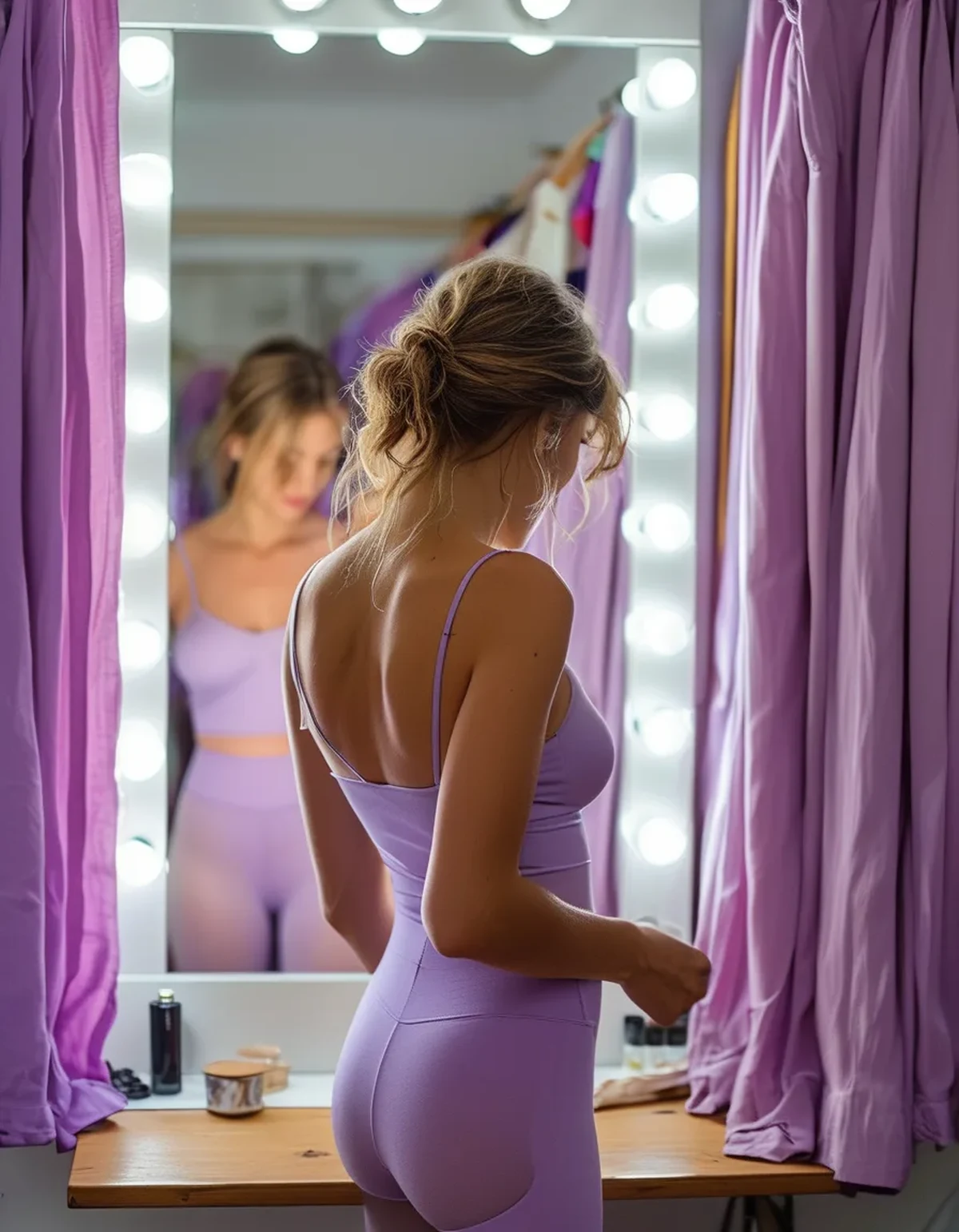
The mirror test in a fitting room is nearly useless. Fitting rooms are lit from above, which is the one angle that hides sheerness at the seat. The gym has overhead lighting too, but you are bent over, which changes everything. Bend forward and look in the mirror behind you — awkward, and it is the only test that predicts real conditions.
Pastels get sheerer with age, and faster than darks. Repeated washing and stretching gradually opens the knit. In black, that shows up as fading. In lilac, it shows up as transparency, which is a much shorter functional lifespan for the same wear.
Sizing down is the worst possible response. More stretch means more thinning. If a pastel pair is borderline, sizing up helps and sizing down guarantees the problem.
Some pastels are worse than others, and it is not about lightness. Shades close to common skin tones — beige, blush, pale peach — read as sheer at the slightest transparency because there is minimal contrast to begin with. Cool pastels like mint and pale blue hide the same amount of transmission far better.
Fabric softener accelerates it. It coats fibers and gradually reduces the elastic recovery that keeps a knit tight. Skipping it extends the opaque life of a pastel pair noticeably, which is the same reason it is worth skipping for sweat-wicking performance.
What should you do about the pairs you already own?
Some are salvageable in context, and some are gym-lighting casualties.
Reassign rather than discard. A pastel pair that is borderline under squat load is completely fine for walking, yoga at home, errands, or travel. The failure is specific to deep flexion under bright overhead light.
Wash cold and inside out. Heat degrades elastane, and degraded elastane means a knit that no longer recovers, which means permanent thinning. Cold wash and air dry meaningfully extends how long a light pair stays opaque.
Skip the dryer entirely for pastels. This is the single biggest lifespan variable. Dryer heat is what turns a two-year pair into a six-month one.
Layer with a longer top rather than replacing. A top that covers the seat solves the practical problem instantly and costs nothing, and it is why the longline top became standard alongside light-colored bottoms.
Buy the next pair on gsm, not on shade. People respond to this problem by avoiding pastels entirely, which is unnecessary. A 250 gsm pastel outperforms a 180 gsm black — the number matters more than the color does.
FAQ: Pastel Activewear Sheerness, Answered
Is there a pastel color that is never see-through?
No shade is inherently safe, but cool mid-pastels — sage, dusty blue, mint — disguise transmission better than blush, beige, or cream, which sit closest to skin tone and therefore show the least contrast. Shade choice reduces visibility; only fabric weight removes it.
Does the price tag predict opacity?
Loosely, and less than you would hope. What price correlates with is fabric weight and construction, so an expensive pair is more likely to be heavy and gusseted. But plenty of premium pastels are lightweight by design, and plenty of mid-price pairs are 250 gsm. Check the number, not the brand.
Will they get better after a few washes?
No — this only goes one direction. Fabric opens up with wear and washing, never tightens. If a pair is borderline on day one, it is going to be worse in three months, which makes the first-wear test the one that counts.
TL;DR:
- Pale dye lets light through; black absorbs it, so identical fabric behaves differently by color
- Stretching thins the knit and pastels have no dye absorption to compensate
- 240 gsm and up is the practical threshold for opaque light colors; below 200 expect problems
- Size up rather than down, skip the dryer and fabric softener, and test against your own skin
- Sheerness only worsens with age — the first-wear test is the one that predicts everything
The frustrating part is that this reads as a quality failure and it usually is not — it is physics that the manufacturer priced in and did not mention. Check the gsm before you buy and you can wear whatever color you actually want.
See It in Motion
Seen here: High Waist 8” Yoga Shorts — shop similar styles on bubblelime.com
Keep Reading
This article is for general informational and styling purposes only. Fit, sizing, and product availability may vary.