Why Your Pastel Activewear Looks Dingy After One Season (and How to Stop It)
Quick Answer: Pastel activewear goes dingy mainly from build-up, not fading. Detergent residue, fabric softener, body oils, and hard-water minerals accumulate in synthetic fibers and read as grey or yellow. The fix is less detergent, no softener, cold water, and a periodic stripping wash — not more washing or hotter water.
Your pale lilac set has that flat, slightly grey look. Not stained, not obviously faded — just tired, like it has been photographed through a dirty window.
Synthetic fibers do not usually lose color that fast. What has happened is that a film has built up on top of the color, and the film is what you are seeing.
Here is what causes it, in the order of how much damage each one does.
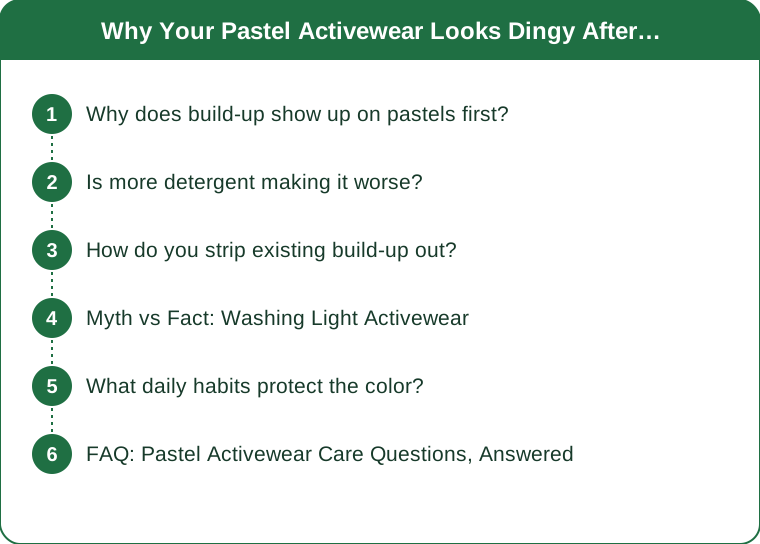
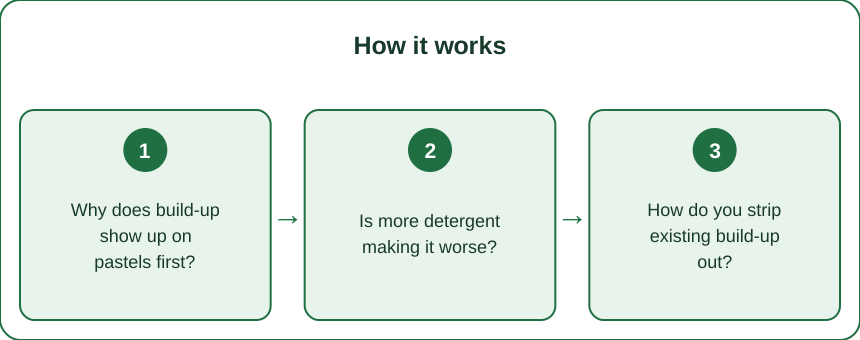
Why does build-up show up on pastels first?
Because pastels have nowhere to hide it.
A dark legging accumulates the same residue, but the deposit is close in value to the fabric, so it reads as a slight dulling at most. On a pale fabric, a thin grey or yellow film changes the color noticeably, and your eye picks it up instantly next to anything genuinely clean.
The residue itself is a mix of:
- Undissolved detergent, which is by far the biggest contributor. Synthetics are hydrophobic and do not release surfactant easily.
- Fabric softener, which works by coating fibers. That coating is permanent-ish, traps oils, and turns yellow over time.
- Body oils and sebum, which bind readily to polyester and elastane and oxidize to a yellow tone.
- Hard-water minerals, calcium and magnesium, which deposit as a chalky grey film and are the reason the same routine gives different results in different cities.
Notice that three of the four get worse with more product, which is the opposite of most people’s instinct when clothes start looking dull.
Is more detergent making it worse?
Almost certainly, and this is the single most common cause.
Most people use two to three times the detergent they need, particularly with modern concentrated formulas and high-efficiency machines. Excess detergent does not get rinsed out — it stays in the fabric, attracts more soil, and builds the grey film faster.
The corrections:
- Use roughly half the recommended amount for a normal activewear load. Activewear loads are light and low-soil compared with what dosing instructions assume.
- Skip fabric softener entirely. It ruins moisture-wicking performance and is a leading cause of yellowing. This is not a preference; it is the wrong product for synthetics.
- Run an extra rinse. Thirty cents of water, and it removes a large share of what would otherwise deposit.
- Consider a detergent formulated for synthetics or “sport” — these are lower-residue and better at releasing body oils than standard formulas.
If the set already looks dingy, cutting detergent alone will not fix it. You have to remove what is already there.
How do you strip existing build-up out?
A stripping wash removes accumulated residue and often restores a surprising amount of the original color. Do it once, then prevent rather than repeat.
The simple version — vinegar rinse. Wash normally with no detergent, then run a second cycle with half a cup of white vinegar in the rinse compartment. Vinegar dissolves mineral deposits and residual surfactant. Do not combine with bleach, ever.
The stronger version — soak. In a tub of the hottest water the garment’s care label allows, dissolve a tablespoon of washing soda and a tablespoon of oxygen bleach (not chlorine) per gallon. Soak four to six hours, agitating occasionally. The water will look alarming. Rinse thoroughly and machine wash with no detergent afterward.
Important limits:
- Check the care label temperature. Elastane degrades in heat, and a hot strip will cost you compression.
- Do not strip more than two or three times a year. It is hard on fibers.
- Oxygen bleach only. Chlorine bleach yellows synthetics permanently and destroys elastane.
Myth vs Fact: Washing Light Activewear
Myth: Hot water gets pastels cleaner. Fact: Hot water sets body oils and protein soils into synthetics and degrades elastane. Cold water with a proper sport detergent removes oils better and preserves stretch. Cold is the correct answer nearly always.
Myth: Fabric softener keeps them soft and fresh. Fact: It coats the fiber, blocks wicking, traps odor-causing oils, and yellows over time. It is the worst product you can put on activewear, and it is in most people’s routine by default.
Myth: Dingy means faded, so there is nothing to do. Fact: True fading is uncommon on quality synthetics in a single season. A stripping wash restores most “faded” pastels dramatically, which tells you it was residue all along.
Myth: Washing after every wear is what wears them out. Fact: Washing after every sweaty wear is correct and necessary — sweat left in the fabric is what causes permanent odor and yellowing. What wears them out is heat, softener, over-dosing, and the dryer.
What daily habits protect the color?
Prevention is much easier than restoration, and most of it is free.
- Wash inside out. The outer surface — the one you see — is protected from abrasion against the drum and other garments.
- Never leave them in a gym bag. Sweat sitting in a damp fabric for hours is the fastest route to permanent yellowing at the underarms and waistband. Hang them to dry until wash day if you cannot wash immediately.
- Air dry, always. Dryer heat degrades elastane and sets any residual staining. This is also the single biggest factor in how long the garment keeps its shape.
- Wash with like colors and like fabrics. Cotton towels shed lint that lodges in synthetics and reads as dullness. Pastels with pastels, synthetics with synthetics.
- Deodorant and sunscreen are the two worst offenders. Both cause stubborn yellow marks on light fabrics. Let both dry fully before dressing, and treat any marks the same day rather than after they have been through a wash cycle.
- If you have hard water, a periodic vinegar rinse is not optional maintenance — it is the main thing standing between your pastels and a permanent grey cast.
FAQ: Pastel Activewear Care Questions, Answered
Can I use bleach on white or very pale activewear?
Not chlorine bleach. It reacts with elastane and with many synthetic dyes, causing permanent yellowing — often the opposite of what you wanted. Oxygen bleach (sodium percarbonate) is safe for most synthetics and is what to reach for on whites and pastels.
How do I get rid of yellow underarm marks that are already there?
Soak in oxygen bleach and warm water for several hours before washing. If it is a deodorant reaction rather than sweat, a paste of oxygen bleach applied directly to the area for an hour first helps. Marks that have been through a hot dryer are often permanent, which is the strongest practical argument for air drying.
Is it worth buying pastels at all if they need this much care?
The care routine described here is essentially the correct routine for all activewear — cold, low detergent, no softener, air dry. Pastels simply punish you visibly when you get it wrong. Get the routine right and your darks last longer too; you just do not get the same feedback.
TL;DR:
- Dinginess is almost always build-up, not fading — detergent residue, softener, body oils, and hard-water minerals.
- Use about half the detergent, skip fabric softener entirely, wash cold, and add an extra rinse.
- Strip existing build-up with a vinegar rinse or an oxygen-bleach soak, no more than two or three times a year.
- Never use chlorine bleach on synthetics, and never put activewear through a hot dryer.
- Wash inside out, never leave them damp in a bag, and let deodorant and sunscreen dry before dressing.
The set is probably not ruined. Strip it once, fix the routine, and most pastels come back far closer to new than people expect.
See It in Motion
Seen here: High Waist Embossed Yoga Leggings with Side Pockets — shop it on bubblelime.com
Keep Reading
This article is for general informational and styling purposes only. Fit, sizing, and product availability may vary.