Why Pastel Activewear Picks Up Color Transfer From Bags and Car Seats
Quick Answer: Dye migrates. Dark textiles - denim, gym bags, car upholstery, new dark towels - release small amounts of loose dye, and friction plus moisture transfers it onto whatever is pressed against them. Pastel synthetic fabrics are particularly receptive because the same finishes that make them soft and stretchy also give dye somewhere to sit. Prevention beats removal: barrier layers, avoiding damp storage against dark fabric, and washing new dark items separately before they ever meet your pale ones.
And yes, it is genuinely more common on synthetics than on cotton.
Why does dye transfer onto pale activewear so easily?
Three things combine, and activewear fabric is unusually vulnerable to all of them.
Dark textiles carry loose surface dye. No dyeing process fixes 100 percent of dye to the fibre. New denim, new dark towels, cheap synthetic bag linings, and car upholstery all carry unfixed dye at the surface, which comes off with friction. This is called crocking, and it is a known and measured textile property.
Friction plus moisture is the transfer mechanism. Dry contact transfers a little; damp contact transfers substantially more. A sweaty leg against a dark car seat for a 30 minute drive is close to ideal conditions for transfer, which is why this is a post-workout problem rather than a pre-workout one.
Synthetic fibres accept dye differently from cotton. Polyester and nylon are dyed at high temperature with disperse dyes, and loose disperse dye readily migrates into other synthetic fabric - much more readily than it moves onto cotton. This is why your pale technical leggings mark and your pale cotton t-shirt does not.
And the softening finishes make it worse. Many buttery-soft fabrics carry surface treatments that give migrating dye something to bind to. The fabrics that feel best are often the most receptive, which is an unfortunate pairing.
Heat accelerates all of it - which is why a hot car in late summer is the single worst environment for this.
Where is it actually coming from?
The usual suspects, roughly in order of how often they are responsible.
Car seats, especially dark cloth ones. Sweaty legs on a dark seat after a workout is the most common single source. Leather is safer than cloth, and heat makes both worse.
Gym bag interiors. Cheap dark nylon linings crock badly, and damp kit sitting in a bag for hours is the worst-case scenario - moisture, friction, pressure, and time all at once.
New denim. Indigo is famously poor at staying put. A pale legging worn under jeans, or a pale top against a denim jacket, will pick up indigo - and it takes several washes before new denim stops shedding.
Dark towels, especially new ones. Wrapping a pale garment in a dark towel, or drying them together, transfers dye readily.
Yoga mats and gym equipment. Dark rubber and vinyl surfaces can transfer with sweat and pressure, and a rented or shared mat is a genuine source.
And washing machine drums that are not empty. A single dark sock left behind, or residual dye in the water from a previous load, will find your pale items. Running a rinse cycle before washing pale synthetics is a small habit that prevents a specific and annoying failure.
A useful clue: transfer marks follow the shape of the contact - a broad shadow across the back of the thigh points at a seat; a band across the calf points at a bag.

Myth vs Fact: Color Transfer
Myth: it means the garment was cheap. Fact: receptivity to dye migration is a property of the fibre and finish, not the price. Expensive buttery-soft synthetics are often more receptive, not less.
Myth: washing it immediately will fix it. Fact: it helps considerably if you catch it early, but a hot wash can set migrated dye permanently. Cold water and a proper treatment beat speed with heat.
Myth: bleach will remove it. Fact: chlorine bleach damages elastane badly and can turn white activewear yellow. It is close to the worst available option for a pastel technical fabric.
Myth: it is the same as a sweat stain. Fact: entirely different mechanism. Sweat marks are usually oils, salts, and deodorant residue; transfer is foreign dye. They need different treatments, which is why one product often fails on the other.
Myth: dark-colored dye sheets in the wash will prevent it. Fact: color catcher sheets work reasonably well in the wash itself. They do nothing about the transfer that already happened in your car. Prevention has to happen at the point of contact.
How do you prevent and treat it?
Prevention first, because it works much better than removal.
Put a barrier between skin-damp pale fabric and dark surfaces. A towel on the car seat is the single highest-value habit. It costs nothing and prevents the most common source entirely.
Never store damp kit in a dark bag. Get it out within the hour, or carry a light-colored or lined wet bag for the pale items specifically.
Wash new dark items two or three times separately before they share space with pale ones. Denim especially. A tablespoon of white vinegar in the first wash helps set remaining dye.
Wash pale synthetics with pale synthetics only, cold, and check the drum first. Color catcher sheets are worth using as insurance in mixed loads.
For treatment, act early and cold. Soak in cold water with an oxygen-based (not chlorine) stain remover for several hours - overnight is often better than a short hot cycle. Repeat rather than escalating to heat.
Do not tumble dry until the mark is gone. Heat sets dye permanently, and a tumble dryer is the step that converts a treatable transfer into a permanent one. Check after washing, before drying, every time.
And know when it is permanent. Migrated disperse dye in synthetic fibre that has been through heat is generally not coming out. At that point the honest options are reassigning the garment to indoor use, or overdyeing it a darker color - which works surprisingly well on a plain pastel legging and is a legitimate second life.
As the season turns and kit spends longer damp in bags between wear, this problem gets more common, not less.
FAQ: Dye Transfer, Answered
Why does it happen to pastels and not to my black leggings?
It happens to black leggings too - you simply cannot see it. Migrated dye onto dark fabric is invisible. Pale colors show every transfer.
Can I get dye transfer out of activewear?
Sometimes, if you catch it before any heat. Cold soaking with an oxygen-based stain remover, repeated, is the best approach. Once it has been tumble dried, it is usually permanent.
Is it worse on synthetic fabrics?
Yes. Disperse dyes used on polyester and nylon migrate readily into other synthetics. Cotton is much less affected by this particular mechanism.
Will bleach remove it?
No, and it will damage the elastane and can yellow white fabric. Use an oxygen-based product instead.
Why do I only notice it after driving home?
Because that is when the transfer usually happens - damp skin, dark upholstery, pressure, heat, and thirty minutes of friction. A towel on the seat prevents most of it.
Can I overdye a ruined pastel legging?
Yes, and it works well on plain synthetic garments if you use a dye rated for synthetics. Choose a color at least two steps darker than the stain and expect the seams and elastic to take the dye differently.
TL;DR:
- Dark textiles shed loose surface dye, and friction plus moisture transfers it onto whatever is pressed against them.
- Synthetics accept migrating dye far more readily than cotton, and soft finishes make pale activewear especially receptive.
- Usual sources: car seats, dark gym bag linings, new denim, dark towels, and washing machine residue.
- Prevention wins: a towel on the car seat, no damp kit stored in dark bags, and washing new dark items separately two or three times.
- Treat cold, with an oxygen-based remover, repeatedly - and never tumble dry until the mark is gone.
The mark did not come from anything you did wrong. It came from a car seat, and a towel would have stopped it.
See It in Motion
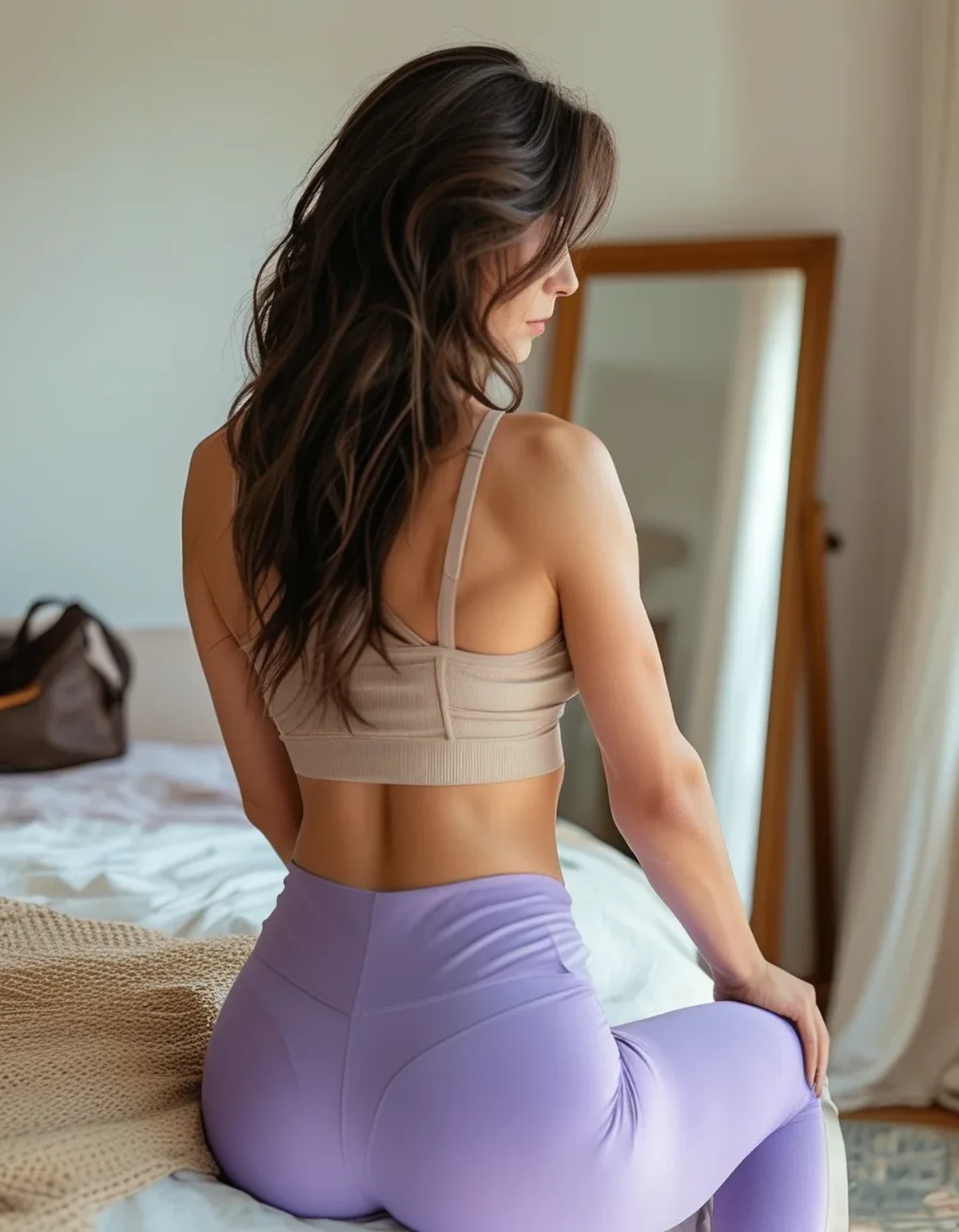
Seen here: High Waist 8” Yoga Shorts — shop similar styles on bubblelime.com
Keep Reading
This article is for general informational and styling purposes only. Fit, sizing, and product availability may vary.