Why Pastel Activewear Fades at the Seams Before the Panels
Quick Answer: Seams fade first because they experience concentrated abrasion, because the thread is usually a different fiber that takes dye differently and holds it less well, and because seams are where fabric is under the most tension during wear and washing. In pastels the effect is far more visible than in dark colors, since a small loss of dye shifts a pale shade toward grey rather than simply making it slightly lighter.
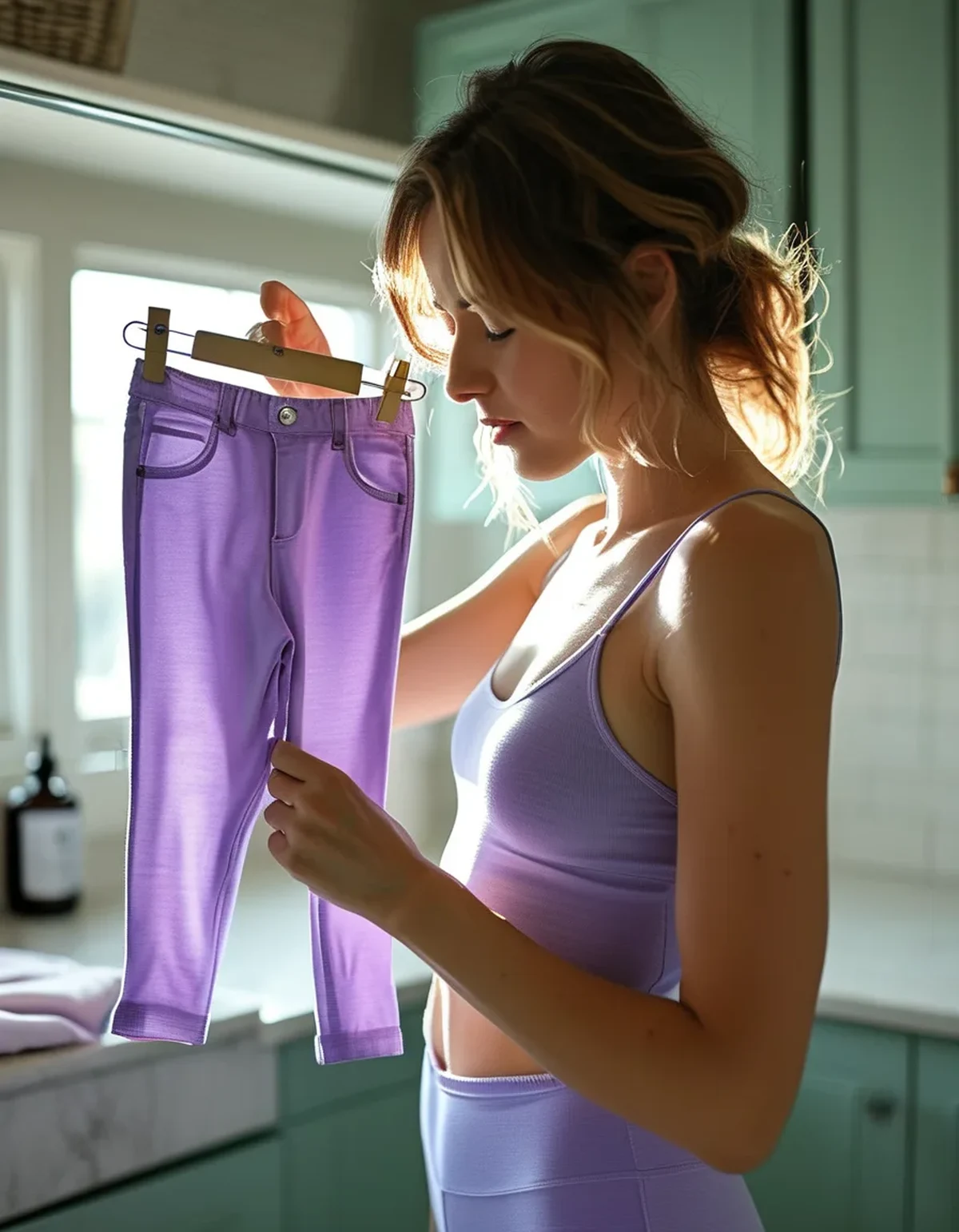
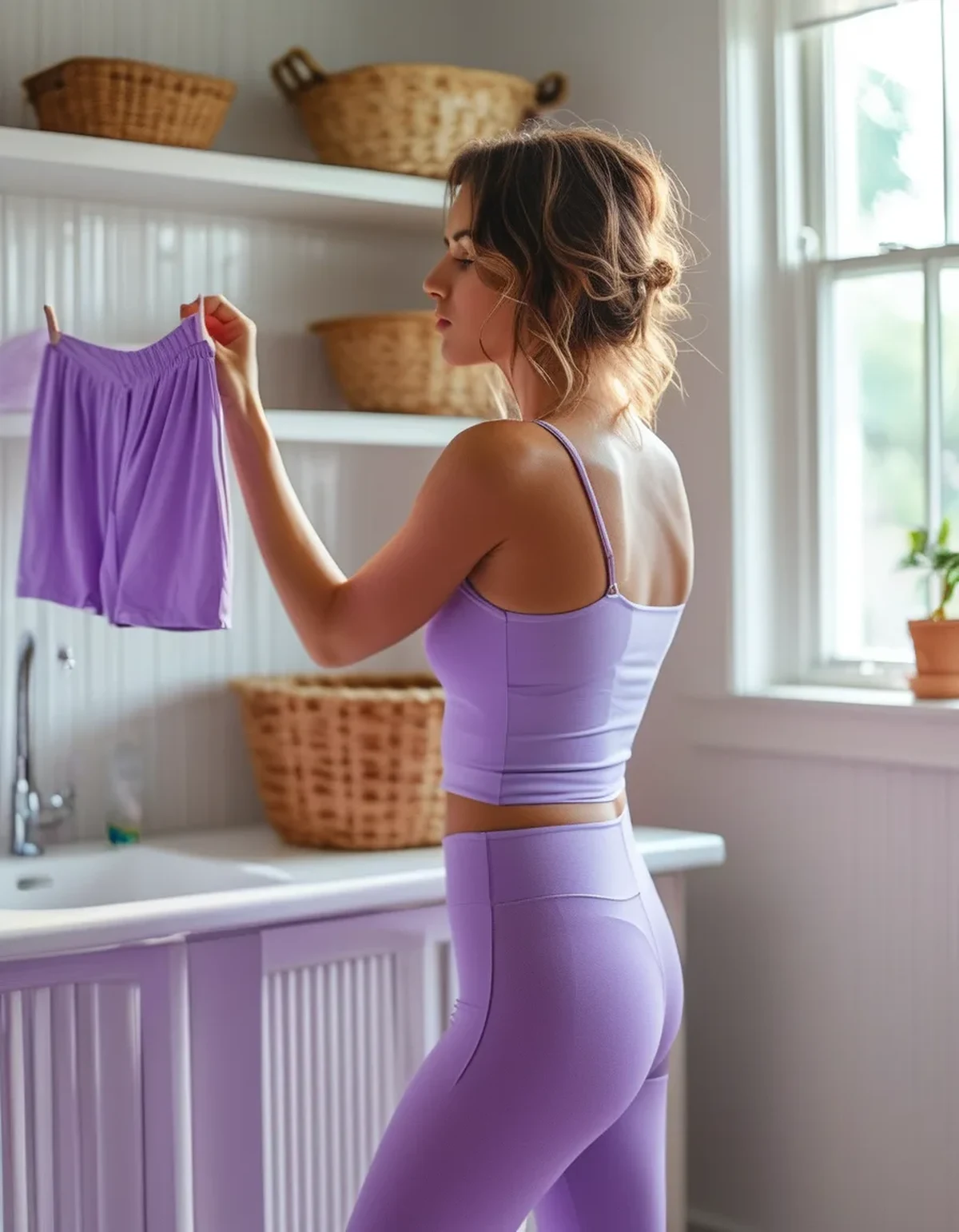
If your pale leggings look worn out while the fabric is still in good condition, the seams are almost always what you are actually seeing.
Why do seams take so much more abrasion?
Because they stick out, physically.
A seam is a raised ridge, even in a flatlock construction designed to minimize it. Any raised surface contacts the outside world more than the flat fabric around it — against a chair, a car seat, a gym bench, the inside of a washing machine drum, and against the opposite leg during walking.
Inner thigh seams get the worst of it because they contact each other with every step. Waistband seams get it from bags, belts, and the constant folding at the waist. Side seams contact seating.
Abrasion removes dye in two ways. It physically wears away surface fibers carrying dye, and it creates microscopic fiber breakage that scatters light differently. The second effect is why a faded seam often looks grey or hazy rather than simply lighter — you are seeing changed light scattering as much as lost pigment.
On a dark garment, a small amount of this is invisible. On a pale lavender or mint, the same amount shifts the color noticeably toward grey, because there is less pigment there to begin with and proportionally more of it is lost.
Why does the thread fade differently from the fabric?
Because it usually is not the same material.
Most activewear fabric is a nylon or polyester blend with elastane. Most sewing thread is polyester, often a different polyester with a different dye affinity. Even when a manufacturer matches the color precisely at production, the two materials age at different rates.
Polyester thread is dyed at high temperature under pressure, and it is generally quite colorfast — but it is also smoother and less absorbent than the surrounding knit, so it holds less dye by volume. Less dye reserve means faster visible change.
There is also a construction factor. Coverstitch and flatlock seams put a lot of thread on the surface of the garment, by design, to keep the seam flat against skin. That means the thread is exposed to abrasion, detergent, and UV far more than thread in a conventional garment.
And the seam allowance underneath is a doubled or tripled layer of fabric, which dries more slowly than a single layer. Extended damp time in a folded state is its own contributor to color change, particularly with residual detergent trapped in it.
Myth vs Fact: Pastel Seam Fading
Myth: It means the garment was cheap. Fact: Seam-first fading happens at every price point because it is driven by abrasion geometry and thread material, both of which are similar across the market. Expensive pastels fade at the seams too — often just as fast.
Myth: Cold water alone prevents it. Fact: Cold water helps significantly with dye migration and elastane life, but it does nothing about mechanical abrasion, which is the dominant cause at seams. Cold water plus a mesh bag addresses both.
Myth: The dryer is the main culprit. Fact: The dryer is a major culprit for elastane and for overall fabric life, but the tumbling abrasion in a washing machine on a long cycle does comparable damage to seams. Cycle length matters more than most people think.
Myth: Turning garments inside out is a myth. Fact: It genuinely helps, because it moves the most exposed surface — including the coverstitch thread — to the inside of the tumbling mass where it contacts other garments less.
Myth: Faded seams can be restored with dye. Fact: Almost never successfully at home, because the thread and the fabric will take home dye at different rates and you will end up with a more visible contrast, not less.
What actually slows it down?
Five things, roughly in order of effect.
Wash inside out in a mesh bag. This addresses the abrasion mechanism directly and is the single highest-return change. A bag reduces contact with zippers, hooks, and the drum itself.
Use a short cycle. Total tumbling time is the variable that matters. A 30-minute cycle does meaningfully less seam abrasion than a 75-minute one, at similar cleaning outcomes for lightly soiled activewear.
Skip fabric softener entirely. Softener deposits a residue that attracts soil and, on pastels, reads as dinginess concentrated in exactly the doubled-fabric areas where it accumulates most — the seams.
Air dry flat, out of direct sun. UV degrades both dye and elastane. Line drying in sun is one of the fastest ways to fade a pastel, and the seam allowance dries unevenly when hung.
Rotate the garment. Wearing the same pale set twice a week concentrates all the abrasion on one garment. Three sets in rotation roughly triples the time before seam fade becomes visible on any of them.
And one that costs nothing: wash pastels together, not with dark colors. Dye transfer from darks settles preferentially in the porous, high-surface-area seam areas.
FAQ: Pastel Care Questions, Answered
Can I prevent it entirely?
No. Abrasion at raised seams is inherent to the construction. You can push visible fading from a few months out to a year or more, which is the realistic goal.
Are flatlock seams better or worse than overlock?
Flatlock is more comfortable and more exposed. Overlock hides more thread inside but creates a bulkier ridge. In practice they fade at similar rates through different mechanisms.
Does deodorant affect seams specifically?
Yes, especially at underarm seams on tops. Aluminum compounds react with fabric and residue concentrates in the seam allowance where it is hardest to rinse out. Rinsing the underarm area under cold water before washing makes a visible difference on pale tops.
TL;DR:
- Seams are raised, so they take concentrated abrasion from clothing, seating, and the washing machine.
- Seam thread is usually a different polyester that holds less dye and sits exposed on the surface.
- On pastels, small dye loss reads as grey rather than lighter, which is why it looks so obvious.
- Inside out, mesh bag, short cycle, no softener, air dry out of sun, and rotate three sets.
Check the inner thigh seam on your oldest pale leggings against a hidden seam inside the waistband. The gap between them is exactly how much abrasion, not washing, has cost you.
See It in Motion
Seen here: Super High Waist Embossed Yoga Leggings with Inner Pocket — shop it on bubblelime.com
Keep Reading
This article is for general informational and styling purposes only. Fit, sizing, and product availability may vary.