Which Pastel Shades Hide Sweat and Which Broadcast It
Quick Answer: Sweat visibility is the contrast between a fabric’s dry color and its wet color — wet fabric transmits more light and reads darker, and the shades that sit in the light-but-not-white zone with grey undertones show the widest gap. Pastel grey and greyed sage broadcast; pale pink, lavender, and cream stay quietest; mint and baby blue sit in the middle. But fabric outranks shade: a wicking knit that spreads moisture thin will beat the safest color in a holding cotton, and heathered versions of any pastel hide what flat versions announce.
August is the honest season for this test. Here is how to pick pastels that pass it.
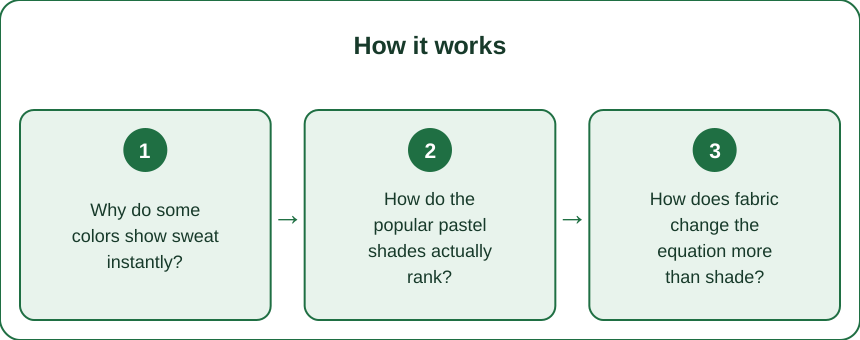
Why do some colors show sweat instantly?
Because wet fabric is optically a different fabric.
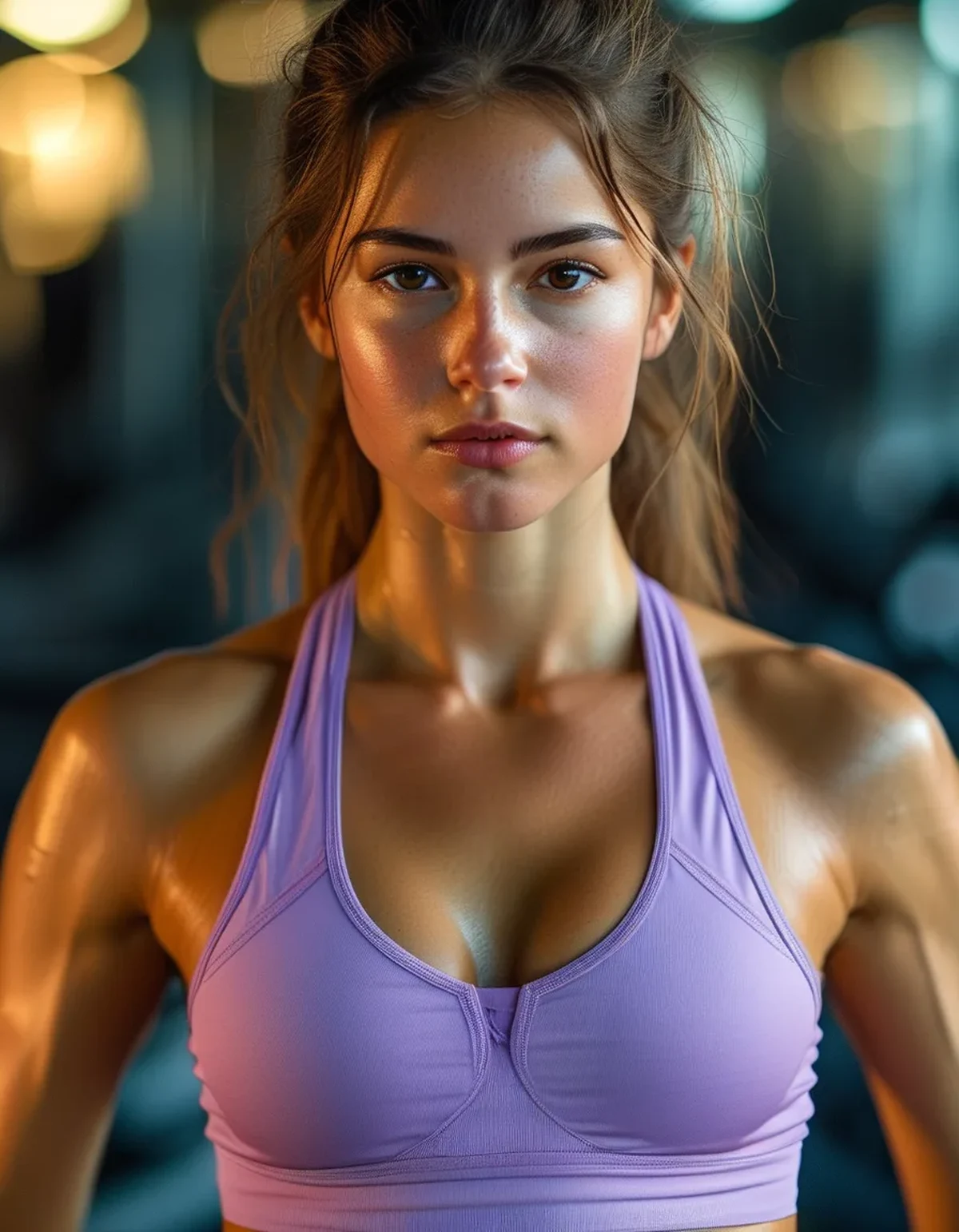
Dry cloth is full of microscopic air gaps that scatter light back at you, which keeps the color bright. When sweat fills those gaps, light passes into the fabric instead of bouncing off — less light returns, and the wet patch reads darker and more saturated. The visibility of sweat is simply the size of the gap between the dry shade and that wet shade.
The extremes are protected. White barely changes because there is minimal color to deepen — the patch shows mostly as sheen. True black barely changes because it cannot get meaningfully darker. The danger zone is the middle: light enough to have somewhere darker to go, saturated enough for the shift to read as a color change. Light heather grey is the famous worst case, and every pastel lives one step from that zone.
Undertone decides which side of the line a pastel falls on. Pastels with warm or violet undertones — pink, peach, lavender — shift toward a richer version of themselves when wet, which the eye reads as depth rather than dampness. Pastels built on a grey base — greyed sage, dusty blue, pastel grey — shift toward darker grey, which the eye reads instantly and specifically as sweat.
Same workout, same output; the shirt decides what gets reported.
How do the popular pastel shades actually rank?
From quietest to loudest, with the reasons attached.
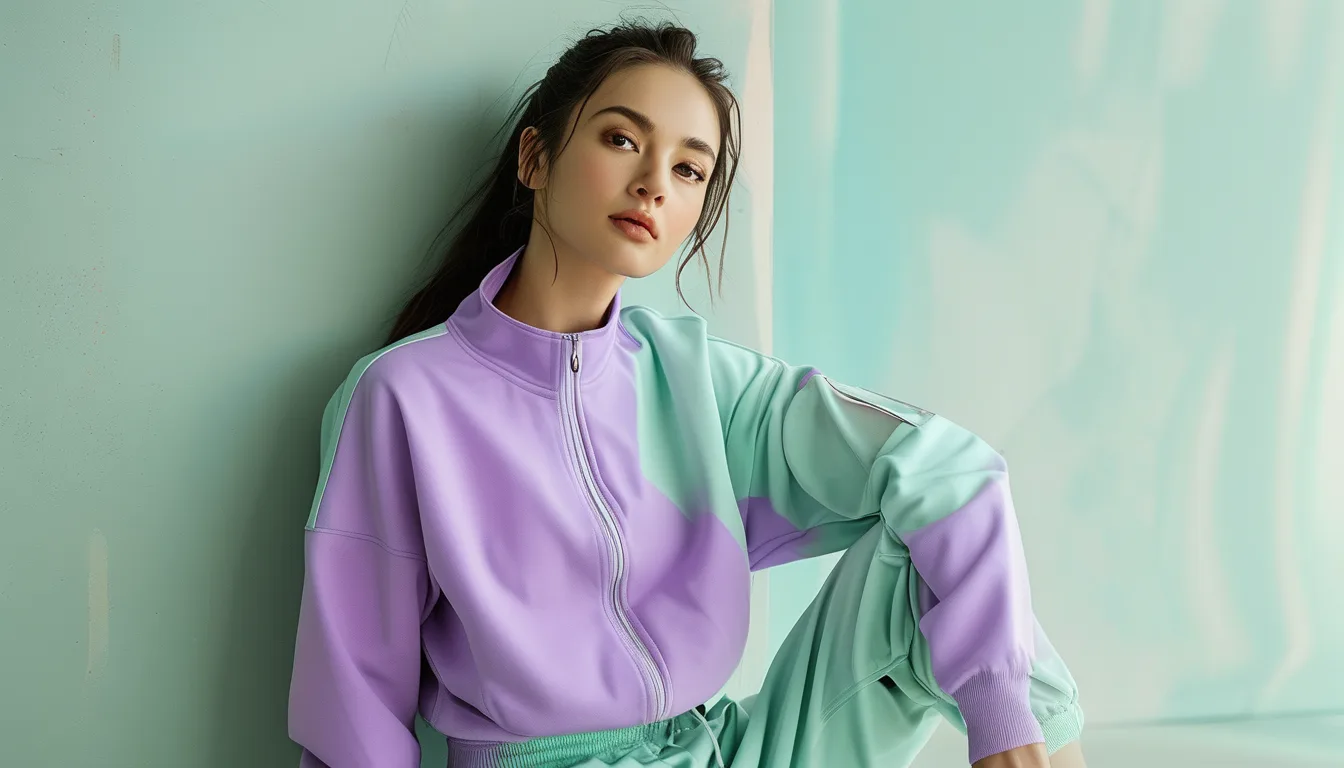
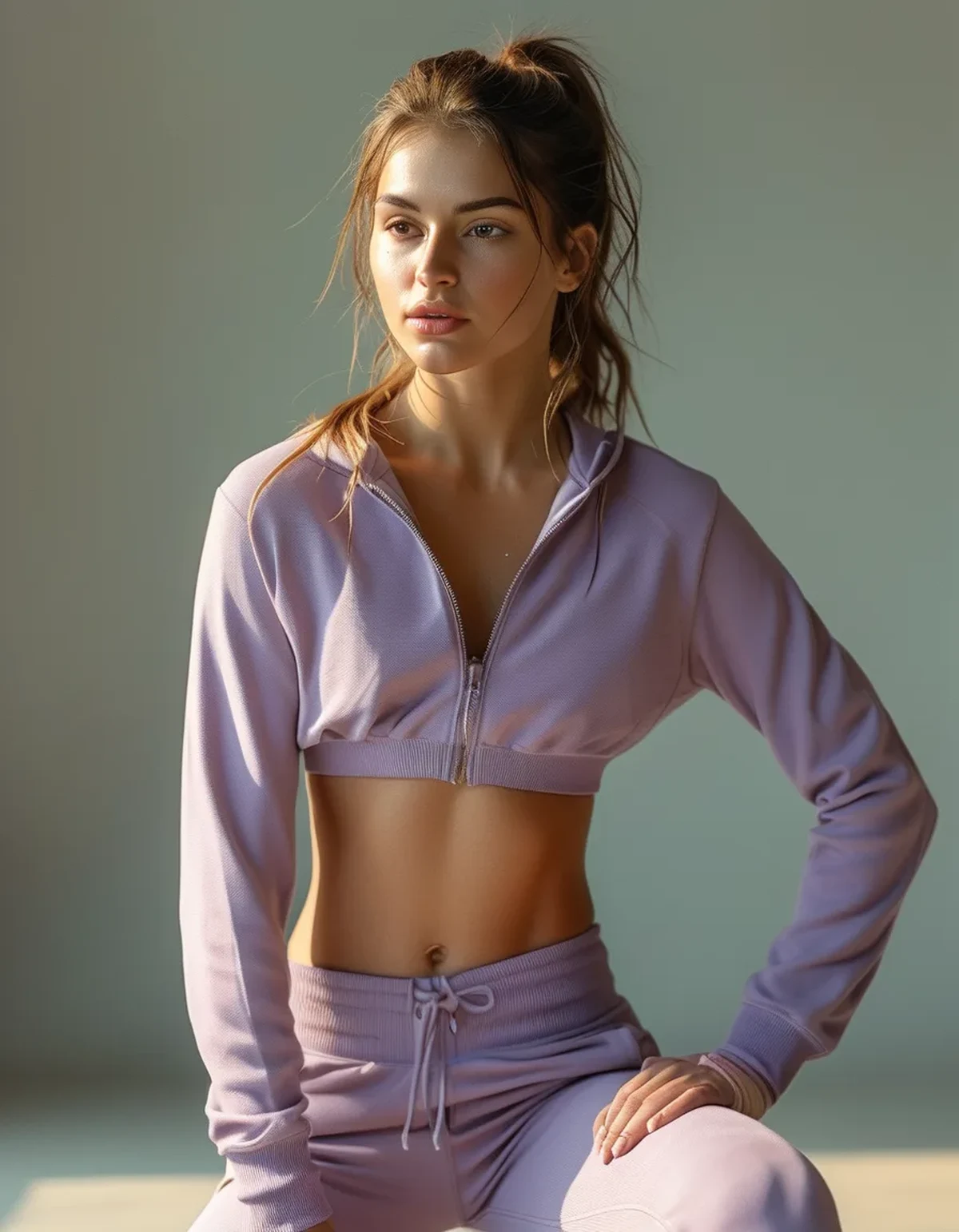
Safest tier: cream, ivory, pale blush pink, light lavender. All sit close to the white end with warm or violet casts. Wet, they deepen slightly toward their own hue — blush reads rosier, lavender reads richer — and the change reads as fabric character, not moisture.
Middle tier: mint, baby blue, pale butter yellow. Enough saturation for a visible wet shift, but clean undertones keep the shift in-family. On a wicking knit these are fine for most training; on cotton they will report a hard session.
Broadcast tier: pastel grey, greyed sage, dusty periwinkle, stone, any shade described as dusty or muted. The grey base is the tell — muted pastels are pastels pre-mixed toward the exact wet-grey their sweat patches will become, which maximizes the visible contrast. Fashion loves these shades right now, which is why so many new sets fail the first hot class.
The pattern exceptions beat the ranking. Heathered or marled versions of any shade drop a tier of visibility, because the built-in mottling gives wet edges nowhere clean to show against. Ribbed textures do the same with shadow lines. A heathered sage will out-perform a flat pale pink in practice.
Store test, ten seconds: press a damp palm — or a drop from your water bottle — into the fabric near the hem. The mark you see is the honest preview of minute twenty.
How does fabric change the equation more than shade?
Because the fabric decides the shape, edge, and lifespan of the patch — the things your eye actually notices.
Wicking synthetics spread; cotton concentrates. A technical nylon or poly knit pulls sweat sideways through the fabric, spreading it thin over a wide area — a faint, soft-edged tone shift that dries in minutes. Cotton absorbs and holds sweat exactly where it lands, producing the concentrated dark patch with a hard, high-contrast edge. The hard edge is what reads as visible sweat far more than the darkness itself. Same shade, opposite verdicts.
Dry time is visibility time. A thin wicking knit finishes evaporating during your cooldown; a cotton-modal blend is still reporting at the coffee stop an hour later. The buttery-soft nylon-elastane knits that dominate good leggings dry fastest of all common activewear fabrics, which is why pastel yoga pants rarely embarrass anyone even in shades whose matching cotton tee would.
Weight and lining stack the odds. Doubled fabric — shelf bras, lined panels — holds moisture between layers and shows a wet outline at the seams; lighter single-layer knits release it.
So the buying rule inverts the instinct: choose the fabric first, then take nearly any pastel you like in it. A greyed sage in a heathered wicking knit is a safer purchase than pale pink in heavy cotton — and a matching set in a quick-dry knit lets you wear the risky-pretty shades on both halves without spending the workout thinking about it.
Myth vs Fact: Sweat and Color
Myth: Black hides everything. Fact: Black hides moisture and then displays minerals — the white salt lines that appear as heavy sweat dries are at maximum contrast on black. Pastels barely show salt. Every shade has its failure mode; they just take turns.
Myth: White is the safest choice. Fact: White hides the color shift and introduces a different reveal — wet white goes translucent. What it stops showing as a patch it starts showing as sheer, which is usually the worse trade in a top.
Myth: Sweating through a shirt means you sweat too much. Fact: The visible patch is a fabric verdict, not a fitness one. Fitter people often sweat earlier and more — an efficient cooling system — and the same output disappears entirely in a spread-and-dry knit.
Myth: Antiperspirant protects the shirt. Fact: Applied right before dressing, it transfers — and its aluminum compounds are what build the stiff yellowed patches on pale fabrics. Apply to fully dry skin, ideally the night before, and let it set before the pastel goes on.
Myth: Pastels are a summer-only problem. Fact: August is peak exposure, but heated studios, layered commutes, and nervous presentations run year-round. A pastel that passes the August test is simply a shirt you never think about again.
FAQ: Pastel Sweat Questions, Answered
Which pastel should I wear for hot yoga or spin?
The heathered version of anything in the safest tier, in a thin wicking knit — heathered blush, marled lavender, cream. Or embrace the middle tier and let it dry on the walk out; in a spread-and-dry fabric the patch is gone before the smoothie line.
Do quick-dry finishes wash out over time?
The wicking chemistry on treated fabrics does fade over many washes — fabric softener accelerates it dramatically, so skip softener on activewear entirely. Knits that wick by construction rather than coating keep the behavior for life.
Why does my pastel sports bra outline show through a dry top?
Doubled and lined layers dry slower than single layers, so the bra keeps reporting after the top has finished. A matching-tone bra under a pastel top mutes the outline; a white bra under wet pastel maximizes it.
Can I fix the yellowed underarms on a pastel I love?
Usually — the buildup is antiperspirant residue, not permanent dye damage. An hour’s soak in warm water with oxygen bleach, then a normal cold wash, recovers most of it. Chlorine bleach sets the yellow instead, so keep it away from the repair.
TL;DR:
- Sweat visibility equals the dry-versus-wet contrast: grey-based pastels broadcast, warm and violet pastels stay quiet, heather hides everything.
- Fabric outranks shade — wicking knits spread moisture thin and dry fast, cotton concentrates it into hard-edged patches.
- Ten-second store test: press a damp palm into the fabric; that mark is minute twenty.
- Skip fabric softener, apply antiperspirant to dry skin early, and rescue yellowed pastels with an oxygen-bleach soak.
Before buying the next set, run the damp-palm test in the fitting room. Ten seconds decides whether that shade spends the fall in rotation or in the drawer.
See It in Motion
Seen here: Racerback Tank Top - White — shop similar styles on bubblelime.com
Keep Reading
This article is for general informational and styling purposes only. Fit, sizing, and product availability may vary.