Why Pastel Activewear Turns Yellow at the Underarms — and How to Reverse It
Quick Answer: Yellow underarm marks come from aluminum salts in antiperspirant reacting with proteins in sweat, not from sweat alone — which is why they appear on light fabrics even when you wash promptly. Prevent them by letting antiperspirant dry fully before dressing, using less of it, and washing gear the same day. To reverse existing marks: soak in white vinegar and cool water or a hydrogen peroxide and baking soda paste for 30 to 60 minutes, then wash cold. Never use hot water or the dryer on a stained garment — heat sets it permanently.

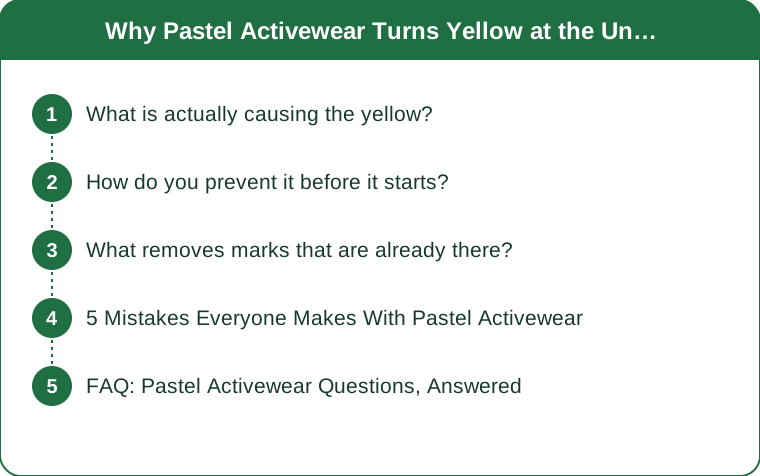
What is actually causing the yellow?
Aluminum-based compounds are the active ingredient in most antiperspirants. They work by forming a temporary plug in the sweat duct.
When those aluminum salts contact the proteins and salts in sweat, they form a compound that binds to fabric fibers and oxidizes to yellow over time. The reaction continues in the fabric long after you have taken the garment off.
That is the key insight: sweat alone rarely yellows fabric. People who use aluminum-free deodorant generally do not get this, and the same person switching products often watches the problem disappear.
The stain also stiffens the fabric, because the bound compound is a solid deposit within the weave. That crusty feeling at the underarm of an old top is the same substance as the discoloration.
On synthetics specifically, the compound bonds tightly because polyester and nylon are oleophilic — they attract oils, and antiperspirant residue is carried in an oily base. This is why activewear yellows faster than cotton at the same rate of use.
Heat accelerates the oxidation dramatically, which is why the dryer is the single worst thing you can do to a garment with any residue in it.
How do you prevent it before it starts?
Let antiperspirant dry completely. Two to three minutes before dressing. Wet product transfers directly onto fabric; dry product mostly stays on skin. This one habit prevents most of the problem.
Use less. A thin layer is as effective as a thick one for the sweat-blocking mechanism. Excess simply becomes residue.
Wash the same day. The reaction proceeds over time in the fabric. A top that sits in a gym bag for three days is significantly more likely to stain than the same top washed that evening.
Never put a worn top in the dryer before washing it. Heat sets residue permanently, and this happens more often than people realize when a top gets caught in a mixed load.
Consider aluminum-free deodorant for workout days. It does not stop sweating, but it eliminates the staining mechanism entirely. Many people use antiperspirant on work days and deodorant on training days.
Rinse the underarm area under cold water immediately after a heavy session if you cannot wash right away. Thirty seconds of rinsing removes a large share of the residue before it can react.
Skip fabric softener, which coats fibers and traps residue underneath where washing cannot reach it.

What removes marks that are already there?
Two approaches, both requiring soak time. Test on an inside seam first, especially on colored fabric.
White vinegar soak. One part white vinegar to four parts cool water, 30 to 60 minutes, then a normal cold wash. Vinegar’s acidity breaks the bond between the aluminum compound and the fibers. This is the gentler option and the right first attempt on delicate performance fabric.
Hydrogen peroxide and baking soda paste. Mix roughly one part dish soap, one part baking soda, and two parts 3 percent hydrogen peroxide. Apply to the stain, work in gently with a soft brush, leave 30 to 60 minutes, then wash cold. This is more aggressive and more effective on set-in marks. Peroxide can lighten colored fabric, so the seam test matters.
Enzyme presoak works on the protein component and is worth adding for older stains, though it does less against the aluminum bond.
What to avoid: chlorine bleach. On protein-based stains it reacts to produce a deeper yellow, making the exact problem worse. It also degrades elastane rapidly.
And air dry afterward, always. Check whether the mark is gone before any heat touches the garment — if any remains, heat will lock it in.
5 Mistakes Everyone Makes With Pastel Activewear
1. Using bleach on yellow stains. It intensifies protein-based yellowing rather than removing it, and it wrecks the elastane. This is the most common and most damaging mistake.
2. Drying before checking. Always inspect a treated garment while it is still wet. Heat is the point of no return.
3. Leaving worn gear in a bag overnight. The reaction continues in warm, damp fabric. Same-day washing genuinely prevents stains.
4. Assuming it is a sweat problem and trying to sweat less. The variable you control is the product, not the perspiration. Switching to aluminum-free for training days solves it for many people.
5. Using fabric softener on light performance fabric. It seals residue into the weave, blocks wicking, and makes the eventual stain harder to remove. Vinegar in the rinse does the softening job without the coating.
FAQ: Pastel Activewear Questions, Answered
Do pastels really show sweat more than other colors?
Wet marks show most on mid-tone colors — grey especially — because the wet-to-dry contrast is greatest there. Very pale pastels show wetness less than grey but show permanent yellowing far more. Different problems, different colors.
Will this happen with natural fibers too?
Yes, but usually more slowly. Synthetics attract the oily carrier in antiperspirant more readily, so activewear tends to yellow faster than a cotton tee worn the same number of times.
Is there a way to save a badly set-in stain?
Sometimes, with repeated peroxide treatments over several rounds. But once fabric has been through the dryer with a set stain multiple times, full removal is unlikely. Prevention is genuinely the whole game here.
Does this damage the fabric itself?
The deposit stiffens fibers and can eventually weaken them at the underarm, which is why old stained tops often thin or tear there first. So removing it is not purely cosmetic.
TL;DR:
- Yellowing is aluminum antiperspirant reacting with sweat proteins, not sweat alone.
- Prevent it: let product dry fully, use less, wash the same day, and consider aluminum-free on training days.
- Reverse it with a vinegar soak or a peroxide and baking soda paste, 30 to 60 minutes, then cold wash.
- Never use bleach — it deepens protein yellowing and destroys elastane.
- Check the stain while wet; heat sets it permanently.
Pastels are worth keeping in the rotation. The staining has one main cause, and it is on your skin rather than in the fabric.
Keep Reading
This article is for general informational and styling purposes only. Fit, sizing, and product availability may vary.