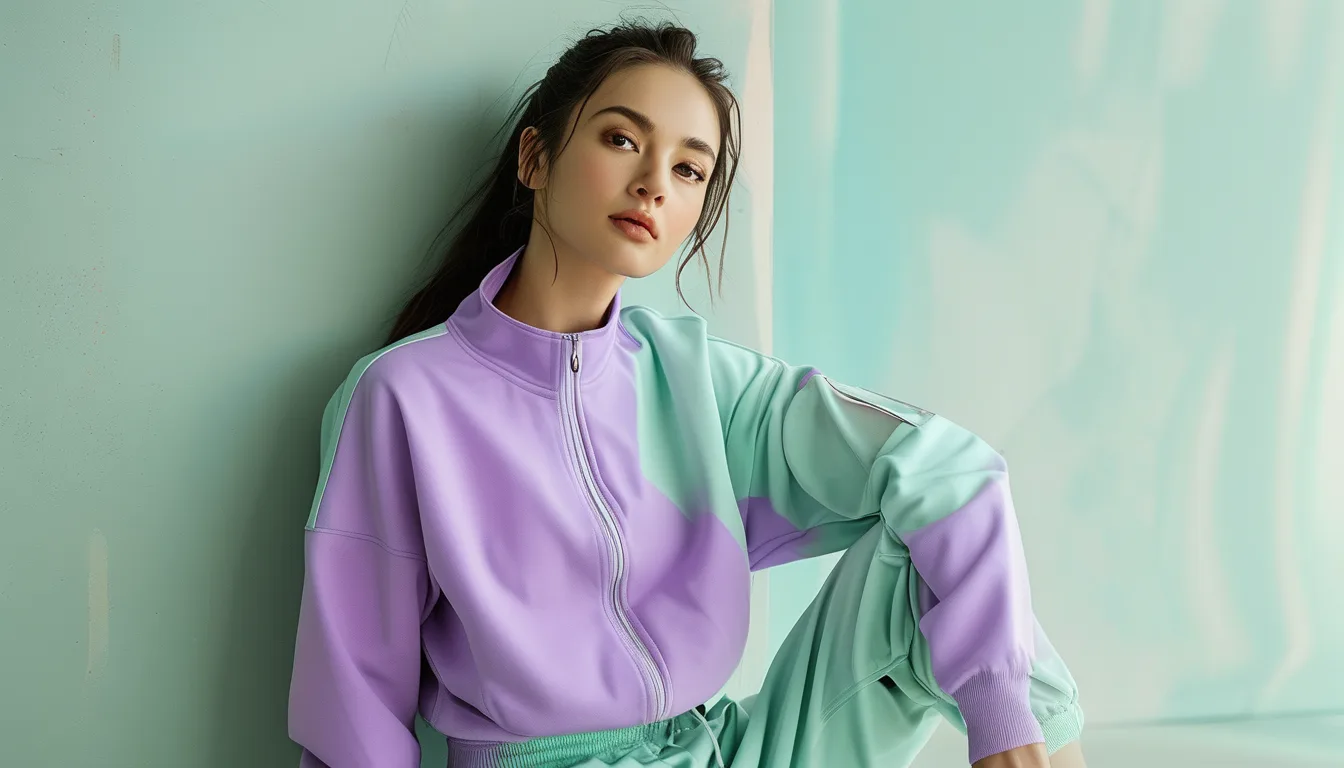
Pastel Activewear and Sweat Marks: Which Fabrics Actually Hide Them
Quick Answer: Sweat marks show on light fabrics because wet fibers become more transparent and darker than dry ones, and the sharpness of that contrast depends on how fast the fabric spreads moisture. Fabrics with strong wicking spread sweat over a wide area so it evaporates before forming a defined patch, while non-wicking fabrics hold it in place and create a hard-edged mark — which is why a pastel performance knit can outperform a pale cotton tee dramatically.
Color is the smaller variable here. Moisture management is the larger one.
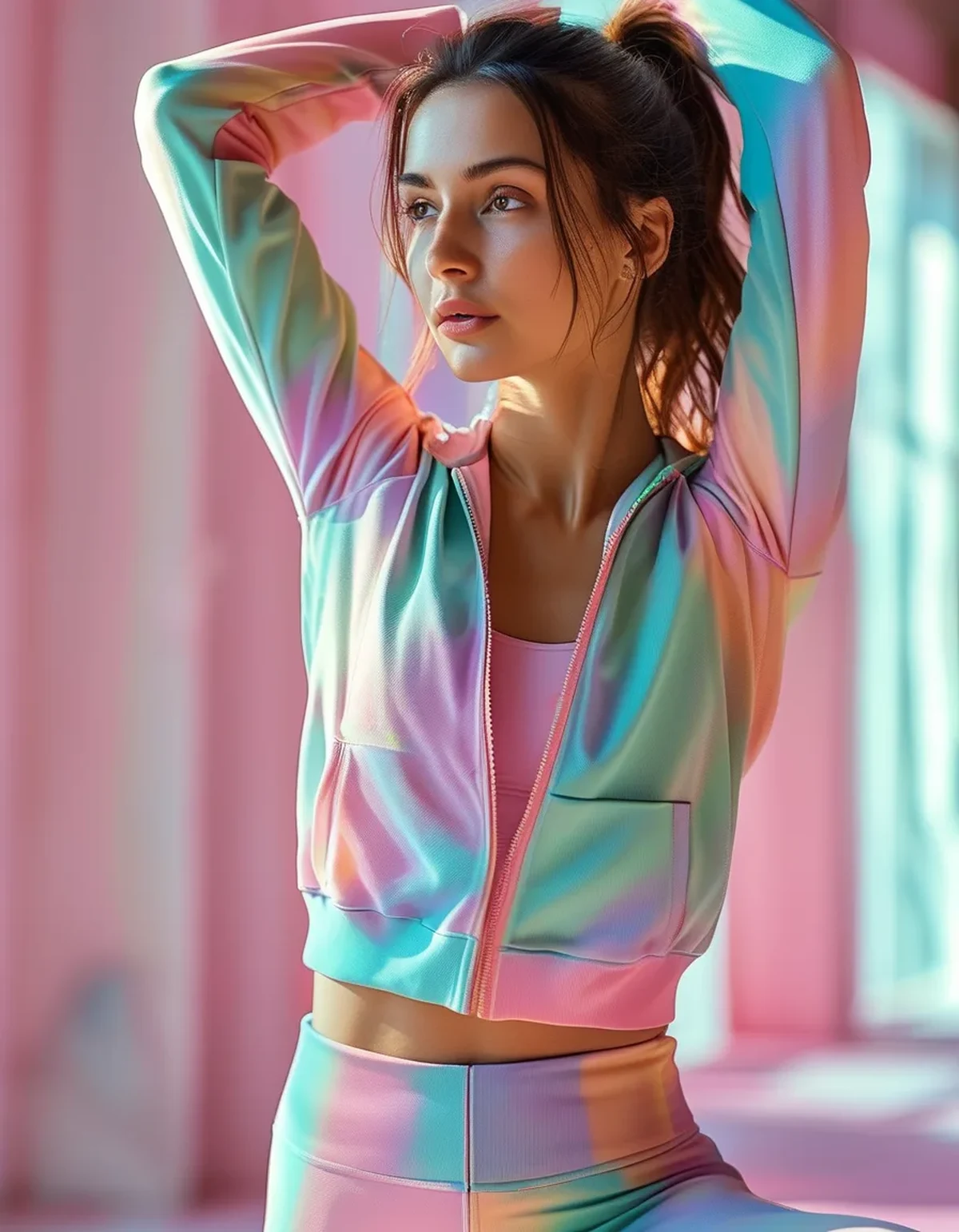
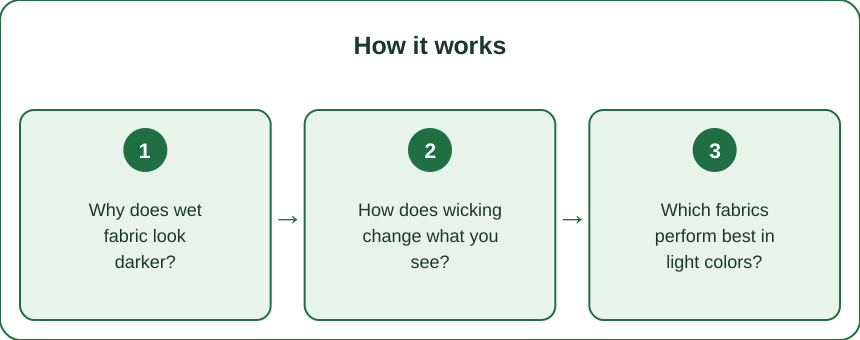
Why does wet fabric look darker?
Water fills the tiny air gaps between fibers, and it has a refractive index much closer to the fiber material than air does. That means less light scatters back to your eye and more passes through — so the wet area reflects less and appears darker and more transparent.
The effect is strongest on light colors precisely because there’s more contrast to lose. A dark fabric is already absorbing most of the light hitting it, so wetting it changes the appearance far less. This is a physical property of the fiber-and-water system, which is why no dye or finish makes a fabric immune — the goal is to control where the water sits, not to stop the darkening.
How does wicking change what you see?
Wicking fabrics move moisture along the fiber surface and spread it laterally across a wide area. A given volume of sweat that would form a concentrated dark patch on a non-wicking fabric instead spreads across several times the surface area — thin enough that the darkening is subtle and diffuse rather than a defined shape.
Spread moisture also evaporates far faster, since evaporation rate scales with surface area. So the mark not only looks softer, it disappears sooner. A well-wicking pastel knit can look nearly dry within minutes of a workout ending, while the same amount of sweat on a pale cotton tee remains a sharp, visible patch for an hour.
Which fabrics perform best in light colors?
Polyester with a wicking finish is the strongest performer — it’s hydrophobic, so it doesn’t absorb water into the fiber and instead moves it along the surface where it spreads and evaporates.
Nylon blends are close behind, with a slightly softer hand feel. Cotton is the worst choice for light colors because it’s absorbent by design: it takes water into the fiber, holds it there, and stays visibly wet for a long time. Textured or heathered pastels outperform solid ones at the same fiber content, since the surface variation breaks up the visual edge of any mark. A heathered light gray is one of the most forgiving light options available.
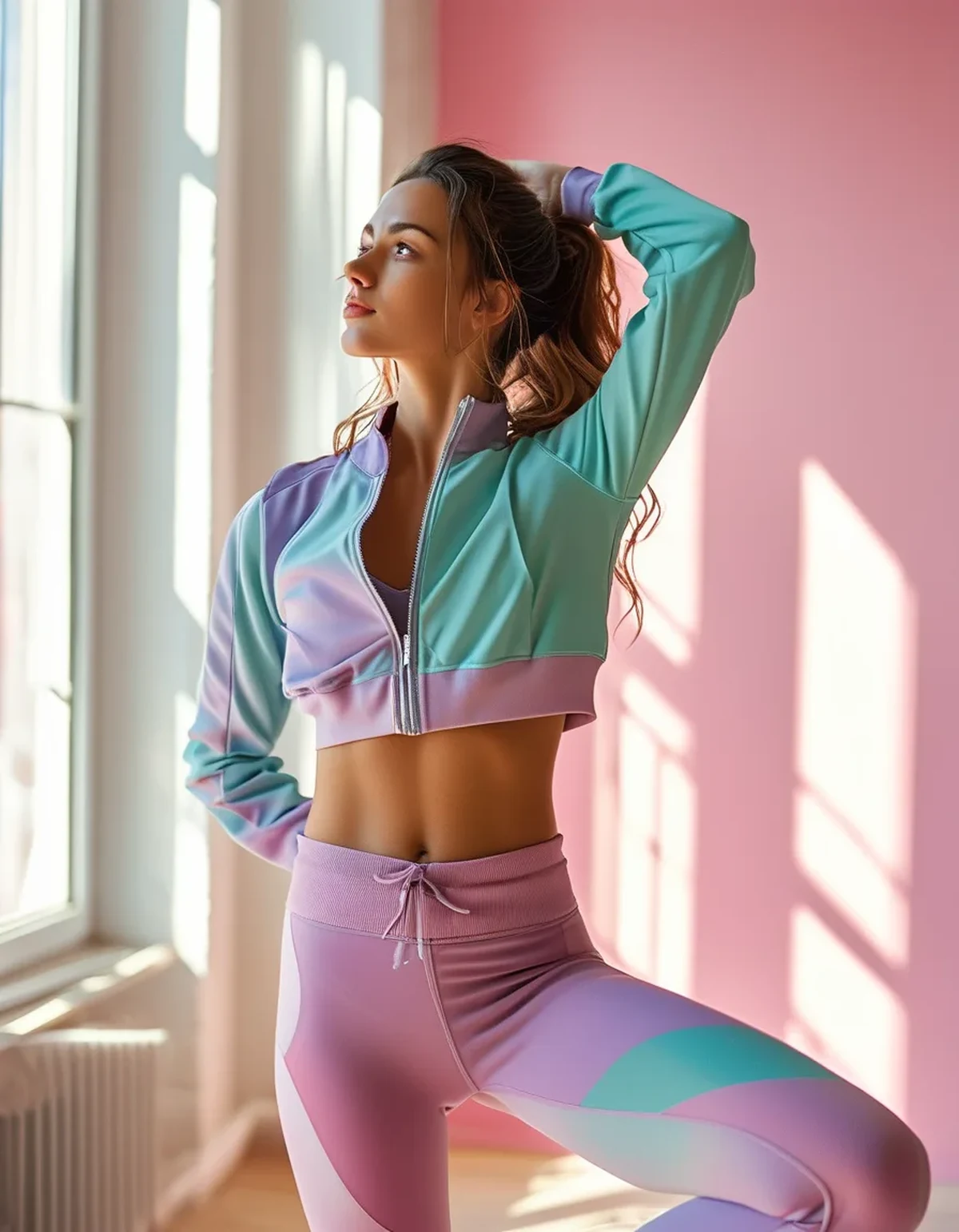
Does garment fit change how visible marks are?
It does. A close-fitting garment is in continuous contact with skin, so sweat transfers immediately across the whole contact area — which, on a wicking fabric, actually helps by spreading it evenly rather than creating patches.
A loose garment contacts skin only at certain points, so sweat concentrates exactly at those contact points and forms defined marks with dry fabric between them. This is why a fitted performance top often shows sweat less dramatically than a loose one in the same fabric. The exception is the underarm area, where contact is unavoidable and concentration is high regardless of fit — a slightly looser cut there genuinely helps.
What Nobody Tells You About Pastels and Sweat
Salt residue is a separate problem from the mark itself. Once sweat dries, salt can leave a faint white edge on dark fabrics and a stiff patch on light ones. Rinsing before the sweat fully dries prevents most of it.
Deodorant residue discolors pastels more than sweat does. Aluminum-based products react with fabric over time and create a yellowish stiffening that’s much harder to remove than sweat. Washing promptly is the main prevention.
Pastels get harder to keep looking new over a full season, not because they mark more but because they show every accumulated stain. A cold pre-soak after heavy sessions makes a real difference.
FAQ: Pastel Activewear Questions, Answered
Are pastel colors a bad idea for hot yoga or high-sweat workouts?
A well-wicking pastel handles it better than most people assume. Pale cotton is the combination to avoid, not pale color generally.
Does antiperspirant help with visible marks on clothing?
Somewhat at the underarm, but it introduces residue buildup that discolors light fabrics over time. Wash promptly if you use it.
Do pastels fade faster than darks?
Actually less visibly — there’s less dye to lose, so the change is subtler. What shows on pastels is staining and residue, not fading.
TL;DR:
- Wet fabric looks darker because water displaces air and reduces light scatter — no dye prevents this
- Wicking fabrics spread sweat over a wide area so it evaporates before forming a defined mark
- Polyester and nylon blends outperform cotton dramatically in light colors
- Heathered and textured pastels hide marks better than flat solids at the same fiber content
Choosing pastels isn’t the risk — choosing absorbent fabric in pastels is. Get the fiber right and light colors hold up better than their reputation suggests.
Keep Reading
This article is for general informational and styling purposes only. Fit, sizing, and product availability may vary.