How to Wash Pastel Activewear So It Actually Stays Pastel
Quick Answer: Pastels dull from three causes, and only one of them is dye loss. Detergent residue leaves a film, body oils and deodorant build a yellow layer, and dye transfer from darker items shifts the shade. The routine that fixes almost all of it: wash pastels together in cold water, use half the detergent you think you need, skip softener entirely, and air dry out of direct sun. Add a monthly vinegar rinse and most pieces stay true for a full season or more.
The good news is that most pastel dulling is deposits, not damage.
Which means it is usually reversible.
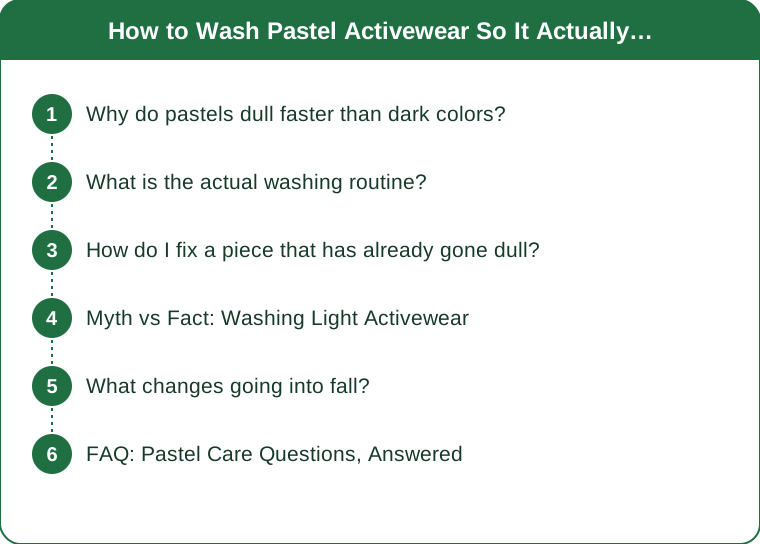
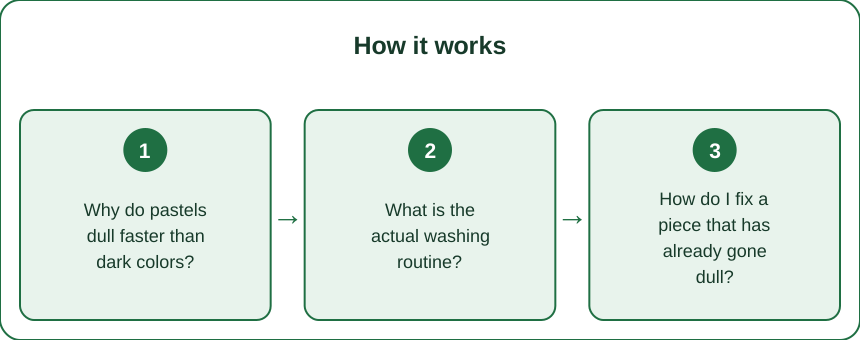
Why do pastels dull faster than dark colors?
Because on a pale base, anything added shows.
On black fabric, a thin film of detergent residue is invisible. On pale mint, the exact same film reads as a gray cast. Pastels do not lose more color - they show more contamination.
The three deposits, in order of how common they are:
1. Detergent residue. The most frequent cause by a wide margin. Modern detergents are concentrated and most people use two to three times what is needed, especially in high-efficiency machines that use very little water. The excess does not rinse out.
2. Body oils and sweat. Sebum oxidizes over time and turns yellow. This is why underarms and waistbands yellow first while the rest of the piece looks fine. Antiperspirant aluminum compounds react with fabric and make it worse.
3. Dye transfer. Small amounts of dye from darker items redeposit onto pale fabric in the wash. One dark item is enough to shift a whole load’s worth of pastels slightly.
And the one true damage: UV and heat. Sun and hot dryers do break down dye molecules, and that part is not reversible.
What is the actual washing routine?
Six steps, none of which take extra time once they are habit.
1. Rinse sweat out the same day. Not a full wash - just cold water through the piece. Sweat left to sit is what oxidizes into the yellow layer, and it happens in a hamper over days.
2. Wash pastels together. Not with whites, which often carry brighteners, and definitely not with darks. A pastel-only load eliminates dye transfer entirely.
3. Use half the recommended detergent. For a normal load of activewear, roughly a tablespoon of concentrated liquid is enough. Less detergent genuinely cleans better here because it actually rinses out.
4. Cold water, gentle cycle, inside out, in a mesh bag. Cold protects elastane and slows dye migration. Inside out puts the abrasion on the hidden surface.
5. No fabric softener, ever. The waxy coating traps oils, holds odor, and produces exactly the dingy cast you are trying to avoid.
6. Air dry in shade. Direct sun bleaches pastels quickly - a mint piece can visibly fade over a few sunny afternoons on a balcony. Indoors or in shade, and never a hot dryer.
How do I fix a piece that has already gone dull?
Diagnose first. The two causes need opposite treatments.
The test: dampen a white cloth and rub the fabric firmly.
- If gray or beige transfers to the cloth, it is residue. Fully fixable.
- If nothing transfers, it is oxidation or dye loss. Partly fixable.
For residue - the stripping wash. Run the piece through a full cycle in cold water with no detergent at all, then a second cycle with a cup of white vinegar in the rinse. The color often comes back noticeably in one pass. Repeat once if needed.
For yellowed underarms and waistbands - oxygen bleach. Soak in a solution of oxygen bleach (not chlorine) and cool water for a few hours. Chlorine bleach yellows synthetic fabrics further and is the wrong tool entirely on activewear.
For a stubborn oily shadow, pre-treat with dish soap worked in with your fingers before the soak.
For genuine dye loss, there is no real repair. A color-refresh or dye product can help for a while, and it will not be even on a blended fabric. This is the case for prevention over rescue.
Myth vs Fact: Washing Light Activewear
Myth: More detergent gets pale clothes cleaner. Fact: past a modest amount, extra detergent stops rinsing out and becomes the film that dulls them. Under-dosing is safer than over-dosing on pastels.
Myth: Hot water is needed to really clean sweaty clothes. Fact: cold water with the right detergent removes sweat effectively, and hot water sets protein stains and damages elastane. Cold is the better choice on every axis here.
Myth: Bleach whitens pastels. Fact: chlorine bleach on synthetics commonly causes yellowing, and on colored fabric it strips the dye unevenly. Oxygen bleach is the pastel-safe version.
Myth: Sunlight is a natural whitener. Fact: it whitens cotton and fades synthetic dyes. Pastel activewear is almost always synthetic - dry it in the shade.
Myth: Once activewear smells after washing, it is finished. Fact: persistent odor is bacteria in a residue layer, not in the fibers themselves. A vinegar soak and a no-detergent strip wash rescues most pieces, and pastels are no exception.
What changes going into fall?
Three things, and they mostly work in your favor.
Less sun exposure means less UV fading. The pieces you wear into October will hold their color better than the same pieces did in July - provided you also stop drying them on a sunny balcony.
More layering means more contact with dyes. A new dark hoodie or a pair of raw denim over pale leggings transfers color, especially where fabric rubs. Wash new dark pieces separately for the first three washes, which is when they shed the most.
Sweat volume drops but sits longer. Cooler weather means you are less likely to change immediately after a workout, and a damp pastel piece left in a bag for hours yellows faster than a soaked one rinsed right away.
And the seasonal storage moment matters. Anything going into a bin for the winter should be washed and fully dry first. Body oils left on stored fabric oxidize into yellow marks over months - a piece put away looking clean can come out in spring visibly stained. Store pastels in breathable cotton, not sealed plastic, and never in direct light.
FAQ: Pastel Care Questions, Answered
How often should I do a vinegar rinse?
About once a month for pieces you wear weekly, or any time the fabric starts feeling slightly slick or looking flat. A cup of white vinegar in the rinse cycle - it will not leave a smell once dry.
Do color-catcher sheets work?
Reasonably well as insurance, but they are not a substitute for sorting. Use them when you have no choice but to mix, not as a routine.
Is it worth hand-washing pastel sports bras?
For light-colored bras with padding, yes. The padding holds detergent and body oils that a short machine rinse does not clear, and those are the pieces that yellow first. A five-minute hand wash in cold water with a tiny amount of detergent handles it.
TL;DR:
- Dulling is usually deposits, not dye loss - which means it is usually reversible.
- Use half the detergent. Over-dosing is the single most common cause of the gray cast on pastels.
- Wash pastels together, cold, inside out, and skip fabric softener completely.
- Air dry in shade. Sun fades synthetic dye and a hot dryer sets everything.
- Rescue with a no-detergent strip wash plus a vinegar rinse; use oxygen bleach, never chlorine, on yellowing.
Run the white-cloth test on your dullest piece tonight. If beige comes off on the cloth, that set is one wash away from looking new again.
See It in Motion
Seen here: Super High Waist Embossed Yoga Leggings with Inner Pocket — shop it on bubblelime.com
Keep Reading
This article is for general informational and styling purposes only. Fit, sizing, and product availability may vary.