Do Pastel Leggings Actually Show Sweat More? The Truth About Light Colors and Workouts
Quick Answer: Yes — pastel and other light colors show wet-patch contrast more than black, because they start out reflecting much more light, so the drop in reflectance when wet is more dramatic and visible. But color is only one factor: fabric weight (how many grams per square meter), weave density, and moisture-wicking finish determine how much sweat actually pools on the surface versus getting absorbed and spread out, and those factors often matter more than color alone.
You love how pastels photograph and how they don’t absorb heat the way black does in summer sun, but you’ve hesitated to wear them to a hard class because of the wet-patch worry. That worry is grounded in real physics — but it’s also solvable with the right fabric choice, not just avoidance.
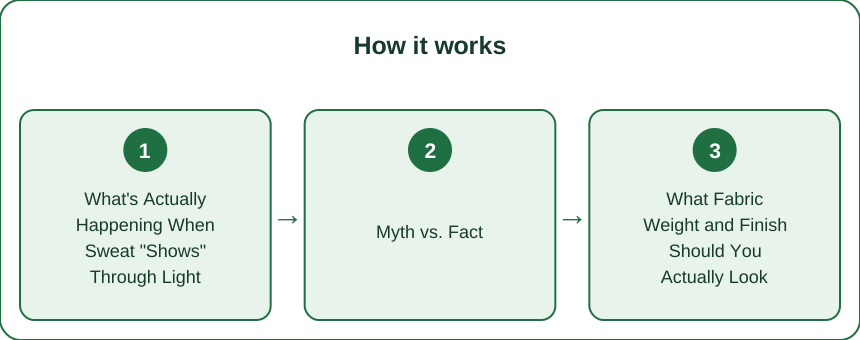
What’s Actually Happening When Sweat “Shows” Through Light Fabric?
As covered in the fabric-and-light relationship: dry fibers scatter light in many directions, which is what makes fabric look opaque and evenly colored. When water fills the gaps between fibers, light scatters less and gets absorbed or transmitted through more instead — the wet area reflects noticeably less light than the dry area around it.
The size of that contrast depends on your starting point. A pastel fabric reflects a large percentage of incoming light when dry — often 60-75%, similar to white. When a section gets wet and that reflectance drops significantly, you get a wide gap between the wet and dry reflectance values, and your eye reads that gap as a clearly defined dark patch.
This is simple physics, not a flaw in pastel fabric specifically — the same thing happens to any light color, including white, pale gray, and cream. It’s a function of how much light the color reflects to begin with, not something particular to pink or lavender or mint.
The good news: the size of a visible wet patch also depends heavily on how the fabric handles moisture, which has nothing to do with color. A fabric that pulls sweat away from your skin and spreads it thinly across a wider surface (moisture-wicking) creates a fainter, more diffuse mark than a fabric that lets sweat pool and saturate in one concentrated spot. So two pastel leggings from two different brands, worn in the identical workout, can show very different amounts of visible sweat — the color is the same, but the fabric engineering isn’t.
Myth vs. Fact: Is It the Color or the Fabric That’s the Real Problem?
Myth: Pastel leggings are simply a bad choice for sweaty workouts, full stop — dark colors are always the safer option.
Fact: Fabric weight and construction can outweigh color as the deciding factor. Weight is measured in grams per square meter (GSM) — most quality legging fabric falls between 200-280 GSM. Lower-weight, thinner fabrics (under 220 GSM) tend to saturate faster and show wetness more readily regardless of color, because there’s less fiber density to absorb and spread moisture before it pools visibly on the surface. Heavier, denser fabrics (250+ GSM) hold more moisture within the weave before it becomes visible on the surface, and they tend to be more opaque to begin with, which also helps mask shape and shadow changes from moisture.
Weave and finish matter just as much. A four-way stretch compressive knit with a tight weave resists the fabric clinging and pooling that makes wet patches read as sharp, defined shapes. A moisture-wicking treatment (often a mechanical texture or chemical finish) pulls sweat to the outer surface faster, where it can evaporate instead of sitting saturated against your skin — this actually reduces how long a wet patch lingers in a visible state, regardless of the base color.
So the honest answer is: color determines how visible a wet patch can be, but fabric determines how much wet patch there actually is to see, and for how long. A well-engineered pastel legging in a heavy, tightly-woven, wicking fabric can outperform a cheap, thin black legging in terms of how put-together you look mid-workout — the black just fails less dramatically because of the contrast math, not because it’s inherently better fabric.
What Fabric Weight and Finish Should You Actually Look For?
When shopping for pastel activewear you plan to sweat in, a few concrete things to check:
GSM (grams per square meter), if listed. Look for 250+ GSM for high-intensity workouts. This is often listed in the product description or fabric details; if it’s not listed, a good proxy is opacity — hold the fabric up to bright light or stretch it across your hand and check whether you can see your skin tone through it. If you can, it’s likely under 220 GSM and will show moisture readily.
A four-way stretch, compressive knit rather than a loose or single-direction stretch fabric. Compressive knits hold their shape and resist the fabric distorting or clinging in a way that creates defined wet-patch edges.
Moisture-wicking language in the product description — “quick-dry,” “moisture-wicking,” or a named technical fabric (many brands trademark their sweat-management fabrics). These finishes are usually a mechanical fiber structure, not just a marketing term, and they genuinely change how sweat behaves on the surface.
A slightly heathered or subtly textured pastel over a completely flat, matte solid. Just like with dark colors, a small amount of tonal variation in the weave breaks up the visual edge of a wet patch, making it read as less defined even at the same moisture level.
Avoid thin, jersey-knit pastel leggings meant more for lounging than training — these are usually under 200 GSM, prioritize softness over compression, and will show sweat fastest of any pastel option.
Does the Type of Workout Change the Calculus?
Yes, meaningfully. Low-to-moderate sweat activities — walking, yoga, pilates, strength training with rest periods — rarely produce enough concentrated moisture to create a visible wet patch even in lighter fabric, because sweat has time to evaporate as you go rather than accumulating. Pastels are a genuinely low-risk choice here regardless of fabric weight.
Sustained high-intensity activities — HIIT, spin, hot yoga, distance running — produce continuous, concentrated sweat in predictable zones (lower back, inner thighs, underarms, waistband), and this is where fabric weight and wicking finish start to matter most. If you’re pastel-loyal for these workouts, prioritize the heaviest, most technical fabric you can find rather than switching to black — a well-engineered pastel can genuinely hold up.
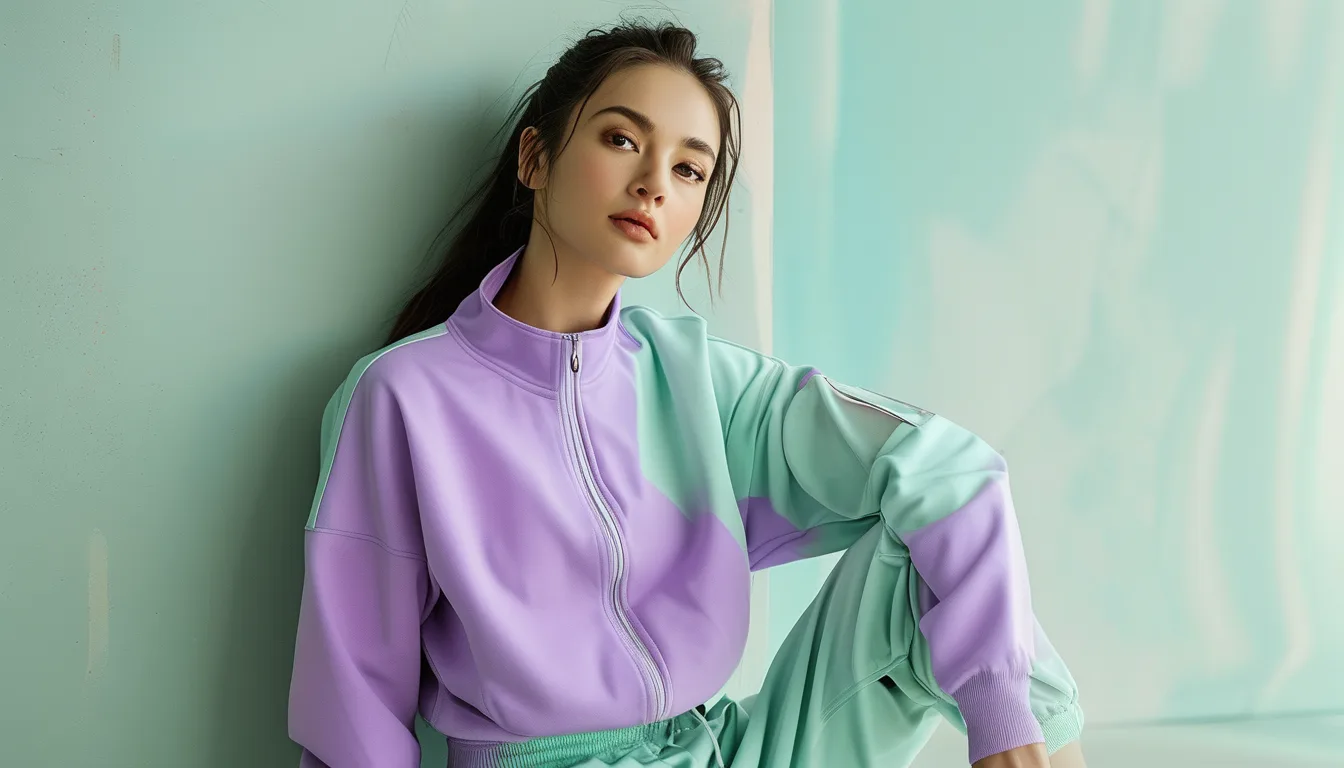
Strategic layering is also a real, practical tool: a slightly longer top or a light zip-up worn open over a pastel sports bra covers the torso zones most prone to visible sweat (chest, lower back) without changing your actual base layer or committing to a full color swap. This is less about hiding sweat and more about controlling which zones are visible in photos or during the highest-intensity portion of class, then removing the layer once you’ve cooled down.
The bottom line for workout selection: match fabric weight to intensity, not color to intensity. A heavy pastel legging can handle a spin class; a thin pastel legging probably can’t — and neither can a thin black one, for that matter.
FAQ: Pastel Leggings and Sweat Questions, Answered
Are pastel leggings really worse than black for sweaty workouts?
They show wet-patch contrast more readily due to how much light they reflect when dry, but a heavy, moisture-wicking pastel fabric can perform close to a thin black fabric. Fabric quality often matters more than color once you’re comparing well-made pieces.
What GSM should I look for if I sweat heavily?
Aim for 250 GSM or higher for high-intensity training. Under 220 GSM tends to show moisture and body shape more readily in any color, pastel especially.
Do certain pastel shades hide sweat better than others?
Slightly deeper or more muted pastels — dusty rose, sage, mauve — perform marginally better than very pale, high-reflectance pastels like baby pink or ice blue, simply because they start with somewhat lower reflectance and therefore a smaller contrast gap when wet.
Will a moisture-wicking spray or treatment help an existing pair of pastel leggings?
Aftermarket water-repellent or wicking treatments can help at the margins, but they don’t fundamentally change the fabric’s weight or weave, which are the bigger determining factors. They’re a reasonable stopgap, not a substitute for choosing well-constructed fabric from the start.
TL;DR:
- Light colors genuinely show more wet-patch contrast than black — that part of the worry is real physics, not in your head.
- Fabric weight (aim for 250+ GSM) and moisture-wicking finish often matter more than color in determining how visible sweat actually gets.
- Compressive four-way stretch knits resist the clinging and pooling that make wet patches look sharply defined.
- Match fabric weight to workout intensity — save your thinnest pastel pieces for low-sweat activities like yoga or walking.
Pastels aren’t the problem — thin fabric is; upgrade the weave, keep the color.
See It in Motion
Seen here: Super High Waist Embossed Yoga Leggings with Inner Pocket — shop it on bubblelime.com
Keep Reading
This article is for general informational and styling purposes only. Fit, sizing, and product availability may vary.